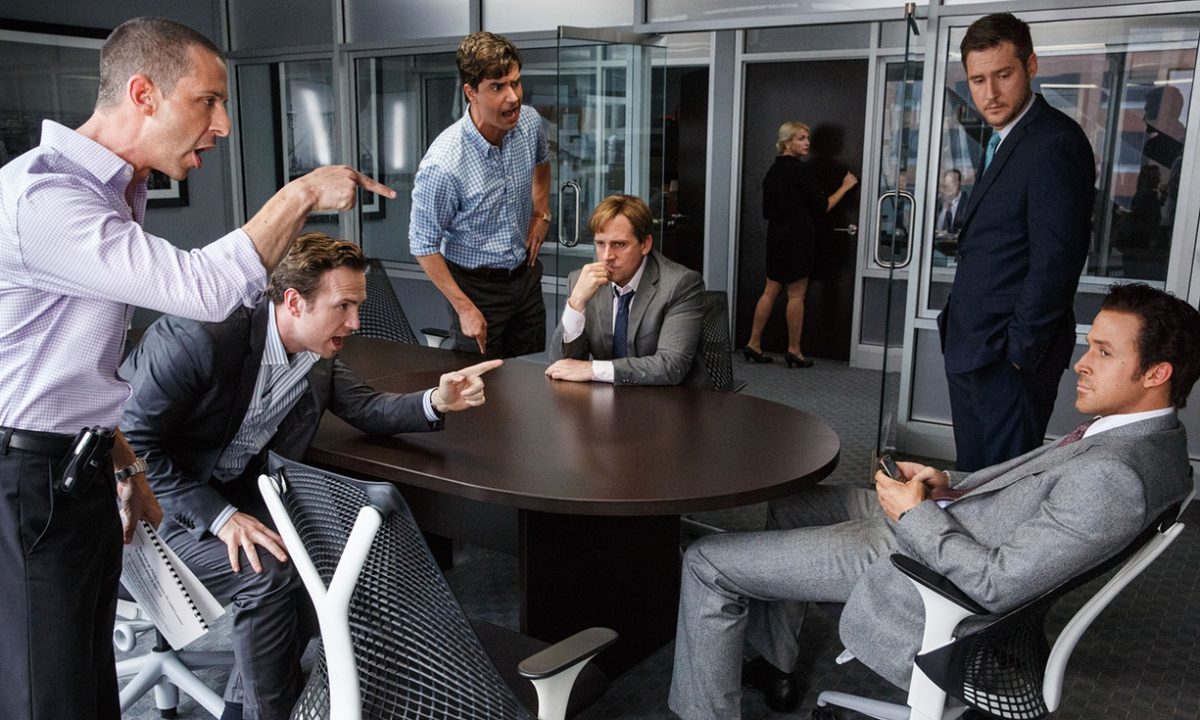
When I think of the collapse of the housing market and the beginning of the Great Recession, I don’t immediately think of a comedy. Millions of hard working Americans losing their homes and pensions and having to bear the burden of a government sponsored bailout makes me think of a hard-hitting and moving drama. Well, The Big Short is both of those. It is more than a comedy, but it is also tremendously entertaining even while it made me really mad and sad.
Adam McKay took the directorial chair in this adaptation of Michael Lewis’ book. McKay has previously been known for a number of Will Ferrell comedies like Anchorman, The Other Guys and Step Brothers which kind of explains the tone of the film. Lewis has been responsible for writing a number of books that have made it to the big screen despite their traditionally dry subject matter, think Moneyball (another Brad Pitt Project) and to a lesser extent The Blind Side.
 The Big Short is set in the years leading up to the financial meltdown of 2008 and tells the story of a handful of investors who saw it coming. Bitter humor (primarily delivered by an excellent narrator in Ryan Gosling) guides us through an educational journey that ultimately ends in tragedy (for everyone but our protagonists). The housing market is usually a rock-solid investment. But these guys read the signs and started suspecting that it was a skyscraper built on sand and it was getting ready to collapse. The “experts” of the day told them that it was impossible, That it couldn’t happen.
What was their argument? Because it never has. But they had no clue how blinded they had become by their own greed and self-interest. They continued giving loans to people, no matter if they’re qualified. And not just any loans but sub-prime adjustable rate mortgage loans. In some ways, it’s a horror story: We were all affected by the illegal and fraudulent activity that led to this downfall, and most of the culprits received no punishment (in fact many used the bailout money to give themselves substantial bonuses).
The most difficult subjects can be explained to the most slow witted man if he has not formed any idea of them already; but the simplest thing cannot be made clear to the most intelligent man if he is firmly persuaded that he knows already, without a shadow of doubt, what is laid before him. – Leo Tolstoy, 1897
Despite its ominous and (let’s be honest) boring subject matter. The film is so entertaining, I had to go back and see it a second time. It sports a star-studded cast (Brad Pitt, Steve Carell, Ryan Gosling, and Christian Bale) effortlessly operating at the top of their game. McKay uses a multitude of techniques to tell the story. There are plenty of fourth-wall breaking moments and monologues, my favorite being Anthony Bourdain using a cooking metaphor to explain the disgusting product that is a Collateralized Debt Obligation.  There are jump cuts, slow motion, foreshadowing and flash backs. The filmmakers use any and all tricks to explain a complicated mess of financial underhandedness in order to help the audience understand, because as our narrator tells us, “Mortgage backed securities, subprime loans, tranches… Pretty confusing right? Does it make you feel bored? Or stupid? Well, it’s supposed to. Wall Street loves to use confusing terms to make you think only they can do what they do. Or even better, for you to leave them the f*** alone.” The banks, mortgage brokers, the credit ratings agencies and the government manipulated people in the nation and world into investing in worthless packages of bonds, and it behooves the director and writer, Adam McKay, to use all cinematic tricks to explain and untangle the financial corruption. The miracle is that the film deciphers the economic melt-down well while entertaining its audience.
 It would probably be a good time to compare this film to two other recent films which addressed similar issues but in very different ways. First you have the over the top Martin Scorsese film, Wolf of Wall Street. That film became known for the number of F-bombs it dropped while attempting to make the world of investing look cool. Then there was the Oscar winning documentary by Charles Ferguson, Inside Job. It had a cool narrator in Matt Damon, but you almost needed a degree in Finance to follow along as they explained the crisis and spoke to experts. I feel like Adam McKay sought to walk a like between these too films, it is not over the top in an attempt to be cool, nor is it preachy and heavy handed. It reminds me of a heist movie in the vein of Ocean’s Eleven, the casino gets taken for all it’s worth, but in the end the house still wins.
 I’ll let you watch the movie for yourself to get to know the awesome characters that McKay develops for us. As a middle-class worker, I could not have less in common with these guys, but dang it if I didn’t feel myself rooting for and empathizing with them. We’ve got a socially backward fund manager who blasts death metal in his office. The two young guys who started on their own fund while they were still in college. Knowing that they are out of their league, they call in the investing giant turned reclusive doomsday-prepper. Then there’s the hedge-fund manager (and his team) with a bad attitude toward banks.
I already mentioned that our tour guide is played by Ryan Gosling, he is a subprime specialist at Deutsche Bank who is certain things will crash. He’s slicker than a used car salesman, but convincing and hilarious. It’s difficult to root for them when that means rooting against the economy and your own wallet. But McKay uses their formidable talents and personalities in such a way that makes it nearly impossible not to.
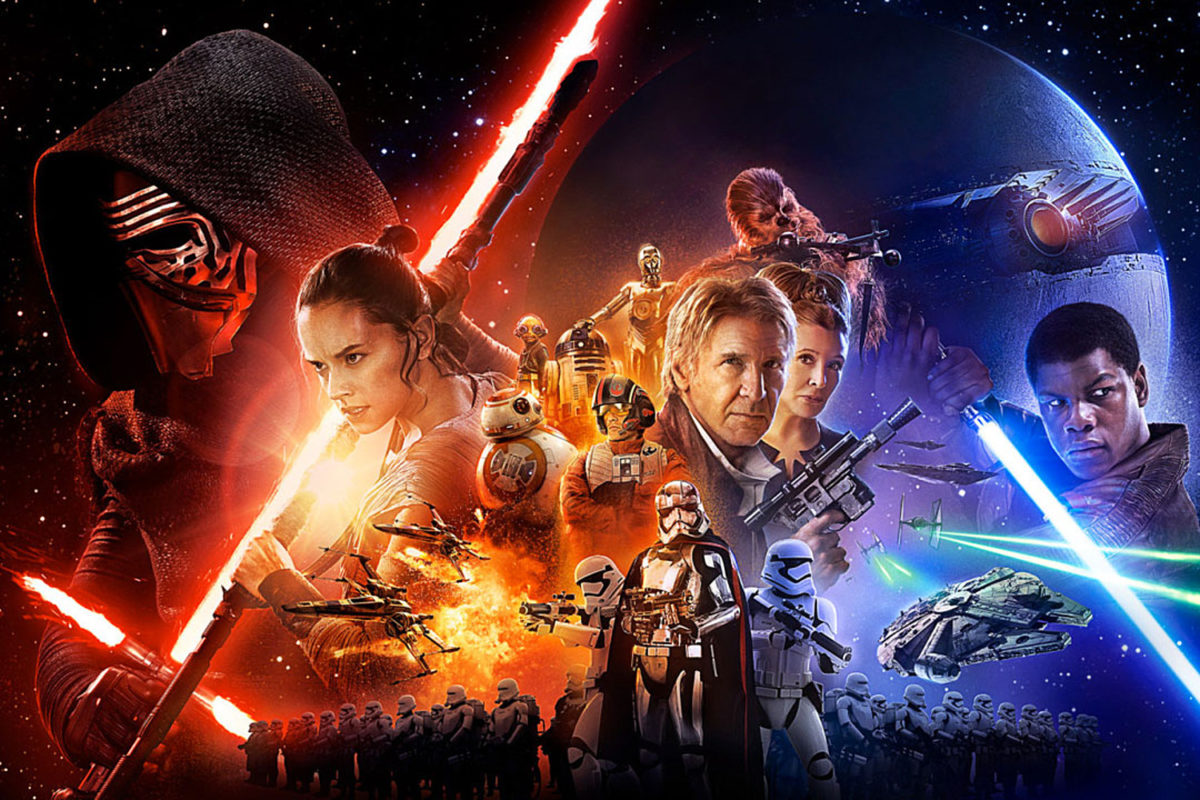
 The movie features a blend of new characters as well as actors reprising their roles from the original movies as we join them 30 years since the destruction of the Death Star and the fall of the Empire. We are treated to Harrison Ford and Peter Mayhew as Han Solo and Chewbacca, Carrie Fisher as Princess turned General Leia Organa, and Mark Hamill even makes a brief albeit epic appearance as the nearly mythical Luke Skywalker. There are plenty of other visuals and references that caused the theaters to erupt with fanboys (and girls) gushing their praise. However, some have said that this film was too close to the originals and it should be called more of a reboot than a sequel. I disagree.
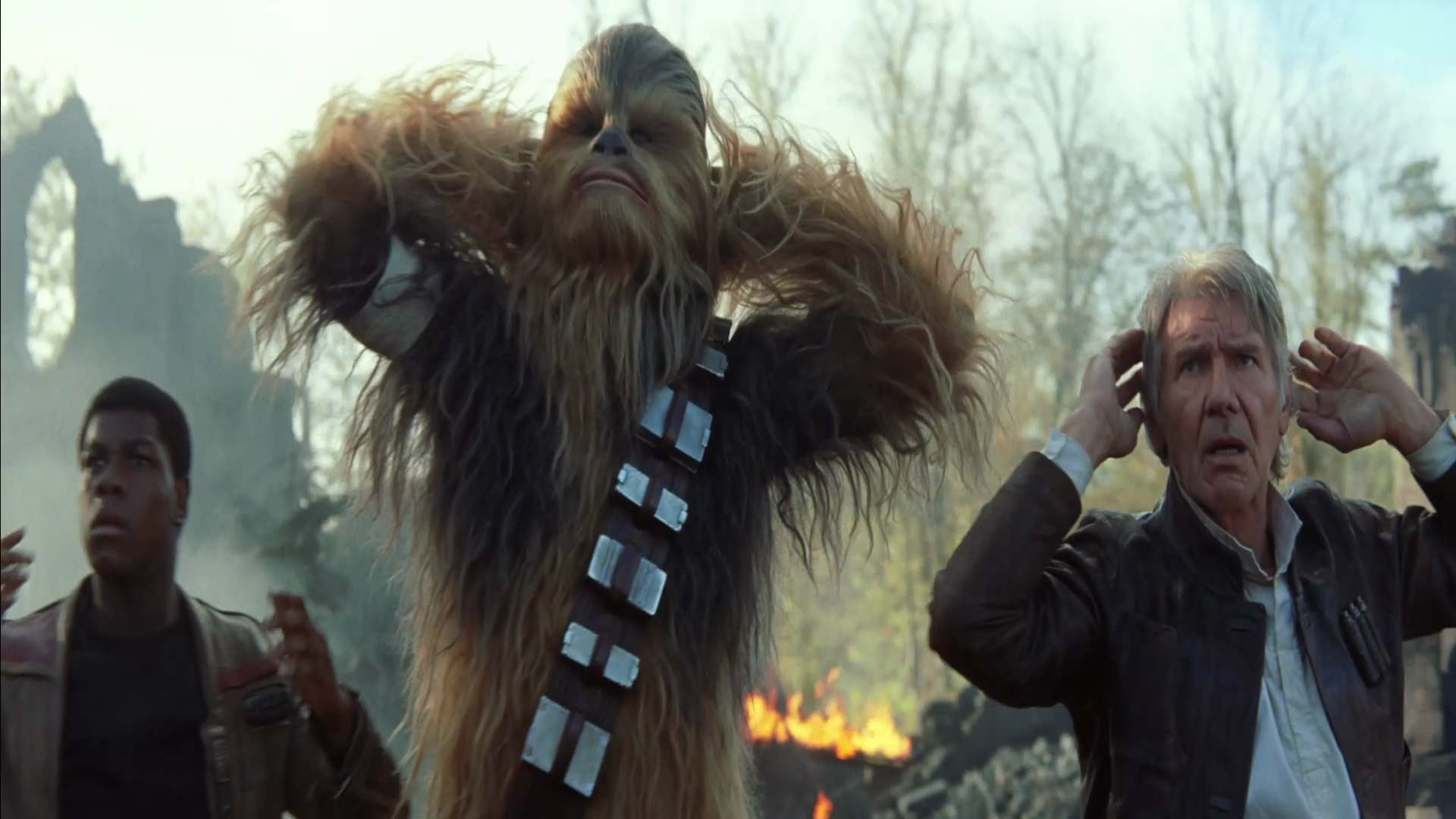 I see the presence of the original characters as a way to pass the baton on to a new generation as we step into new adventures. John Boyega as Finn, Daisy Ridley as Rey, Adam Driver as Kylo Ren, and Oscar Isaac as Poe bring a delightful on-screen chemistry reminiscent of the original trilogy but setting a course for a new direction. The new characters are at home in the Star Wars universe, nothing feels forced, and they welcomingly provide a lighthearted and fitting next generation of heroes. Both the old and new cast work beautifully together, and the result is a film jam-packed with classic banter, references to previous movies and suspenseful action.
 I will not spoil anything here, though if you have waited as long as I did to watch the film you will need to watch out for sneaky spoilers already creeping their way into pop-culture. My recent favorite being Adam Driver reprising his role on Saturday Night Live as Kylo Ren becomes Undercover Boss.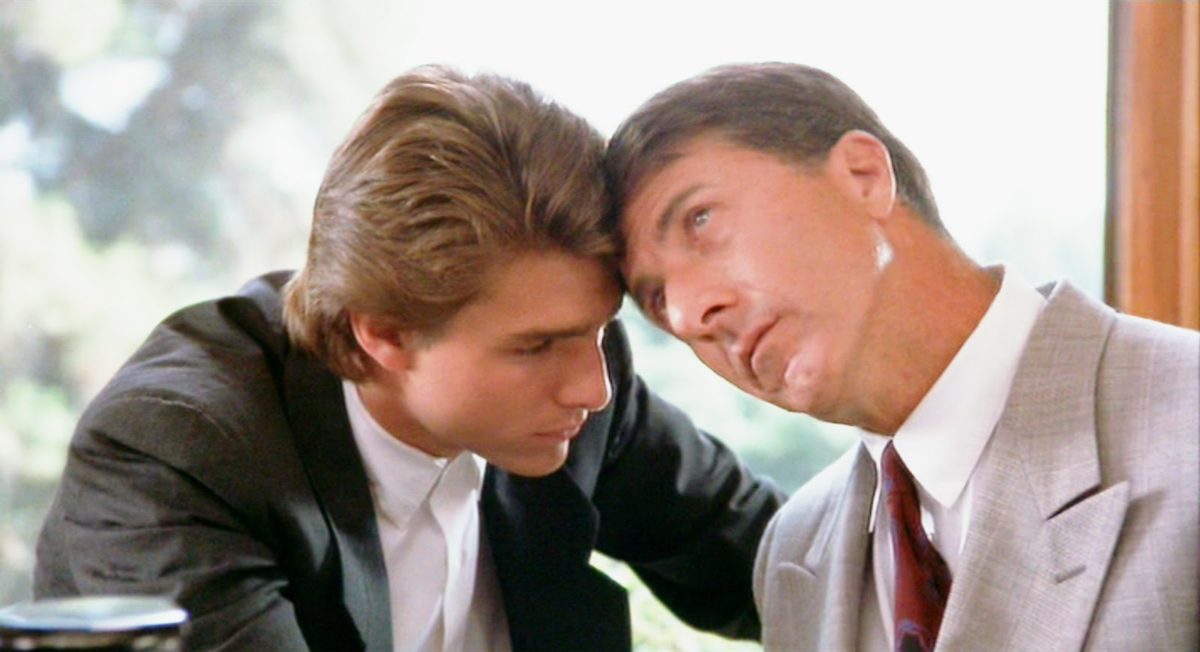
 Rain Man is “definitiely” a very entertaining movie, but it isn’t just funny in certain points. It is Charlie’s character development that keeps the movie interesting. Raymond is steadfast. He is an autistic savant and is unwavering in his personality, his delivery, and his routine. God help you if you mess with his routine.
 This film was made before the autistic spectrum was really outlined the way that we have today. We can even see this in Ebert’s review of the film as he compares autistic people to cats. He asks, “Is it possible to have a relationship with an autistic person? Is it possible to have a relationship with a cat? … I have useful relationships with both of my cats, and they are important to me. But I never know what the cats are thinking.” This film was partly responsible for bringing the savant form of autism to light in popular culture, but it did it in a way that didn’t pander to the audience or play on it for emotional trickery, nor does it linger on the sideshow parlor tricks that Raymond’s disorder affords him. Instead it remains focused on this complicated relationship.
 If you do decide to watch this as a family, I would encourage only much older children because the language is pretty salty and there are even a few brief moments of nudity. If you can catch an edited version on television, it may actually make it better, because in this case, those aspects do nothing to drive the story further. This could have easily been a PG-13 movie. The message comes through loud and clear however as we ask ourselves if Charlie is really any more mature than Raymond even though society accepts one but not the other.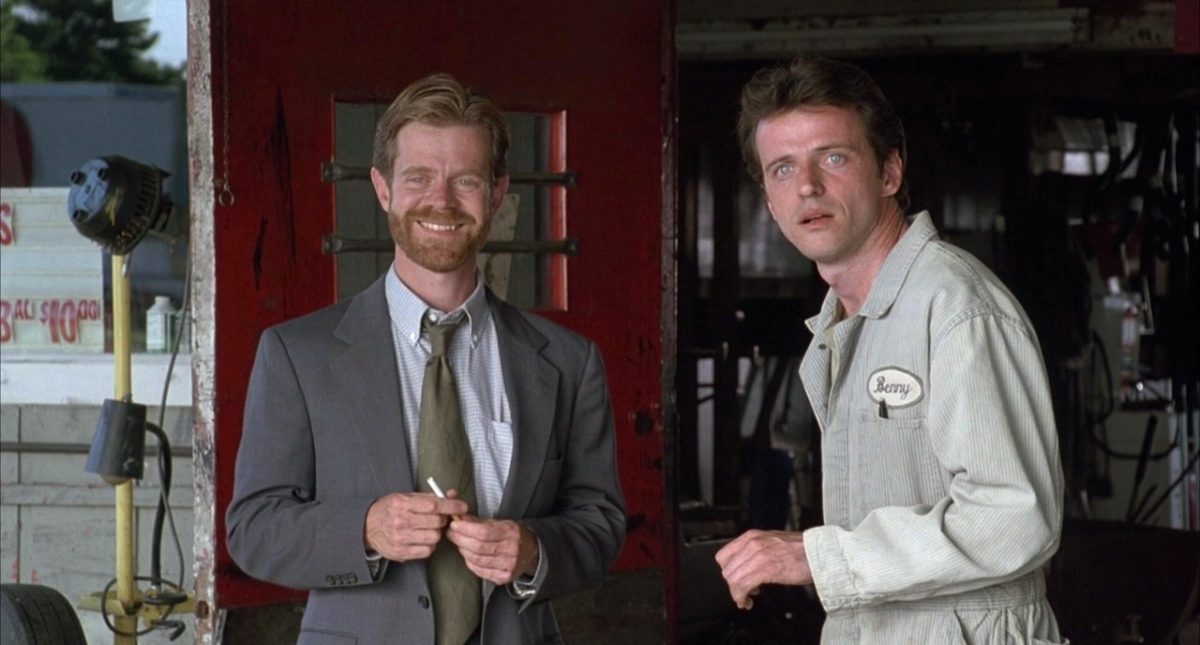

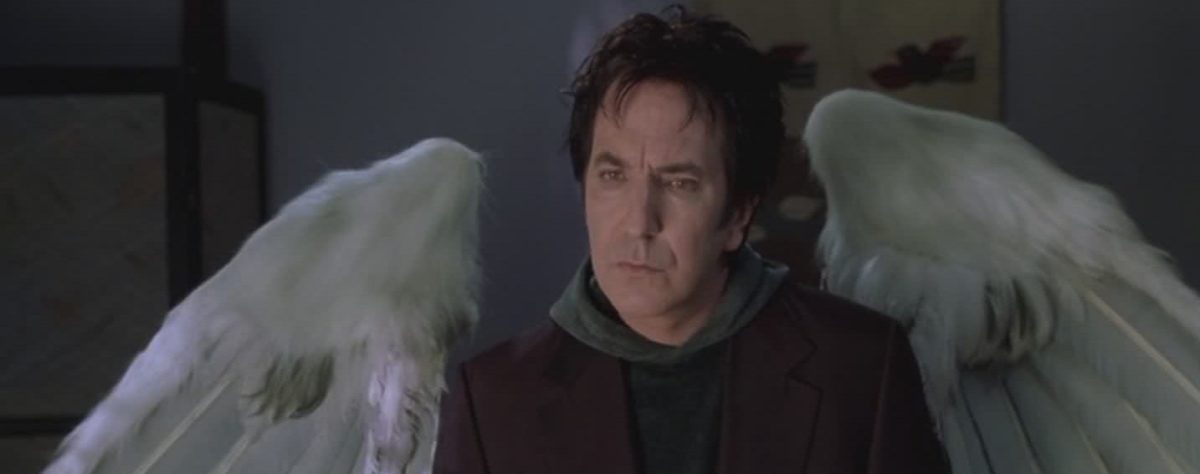







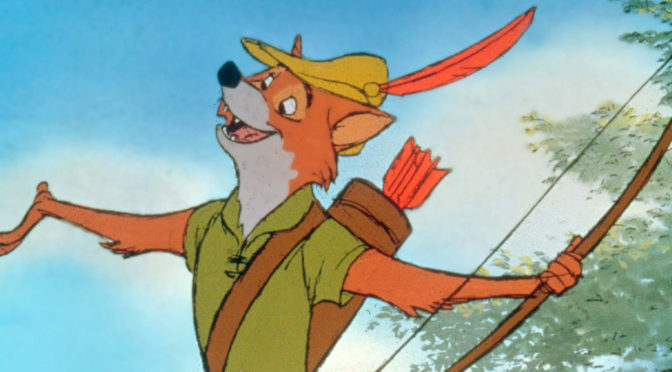
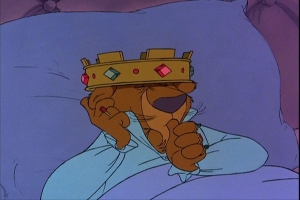 Looking back, as an adult and a film snob, I can see that the picture is notorious for its corner-cutting animation, it simply doesn’t have the sparkling hand-drawn detail of earlier Disney masterpieces, or the glitzy sheen of the latter ones. It’s certainly one of the more crudely-drawn productions of the company. But even when you stack up the complaints lobbed at this incarnation of the Robin Hood tale, they really don’t matter, because in the end we get a richly entertaining good time, and I’m glad to say that this film is just as captivating to my children as it was to me.
 I didn’t expect a period price about 1970s TV news anchors to be funny. I remember seeing the previews back when Austin Powers was in his heyday thinking, “This is a cheap knockoff. Somebody trying to make money by getting in on a popular idea.” I didn’t even see Anchorman: The Legend of Ron Burgundy until relatively recently. But it immediately became one of my favorite and most quoted movies. It’s impossible not to laugh at this massive skit that is a perfect blend of left-field jokes and uncomfortable sexist humor. I was certainly not a Will Ferrell from the comedies he produced before Anchorman. I was so unimpressed by the Saturday Night Live skit based films that he did, like Night at the Roxbury, that Old School, Elf, and this film all flew under my radar. It wasn’t until I saw Stranger Than Fiction that Will Ferrell really got my attention and I began to look back through his filmography. And found that he has remarkable comedic timing and a way of fluctuating between over the top and deadpan deliveries that really translates well to the screen.
 But his crowning achievement is the creation of this fictional San Diego legend. You see, in the Seventies, men read the news. And the movie tells us that in San Diego, no one read it better than Ron Burgundy. In fact, he reads so well off the teleprompter that he’ll read anything (and I mean that). Burgundy rules the local news arena with the help of his crack news team. All men of course, but when the network forces the station manager (Fred Willard) to hire a female reporter, the sexy Veronica Corningstone (Christina Applegate), the men fall into a panic. And the world that they have come to know and love will never be the same.
 Anchorman is a wealth of wickedly stupid humor, the type that’s so dumb it could only ever be thought up by someone intimidatingly smart. That smart duet is Ferrell himself with his co-writer/director Adam McKay, who has teamed up with Ferrell three times since (Talladega Nights, Step Brothers, and The Other Guys). Ron Burgundy is hopelessly juvenile, terminally inappropriate, and so completely unpredictable that he’s also ridiculously funny. I will wager that this is the only film in which you will find someone shooting flames from the end of a jazz flute. But Anchorman is always willing to take things a few steps farther than you’d expect. The result is comedy which produces unstoppable belly laughs simply from the shock of where Ferrell takes the joke next.
 Possibly even more hilarious than Ferrell is his capable news crew. Steve Carrell as Brick Tamland repeatedly doubles me over with insane comments that seem to just come from out of the blue. He shouts, “LOUD NOISES!” when everyone else is in the station manager's office complaining about the addition of Corningstone to the news team. Paul Rudd’s reporter on the scene Brian Fantana is worth seeing just for his musk collection. Even Christina Applegate gets in a few good shots, because she is willing to dish out just as much as her fellow cast mates can throw at her. David Koechner is the weak point as the cowboy hat wearing sportscaster Champ Kind as he just made me uncomfortable. My biggest wish for this film would have been to see John C. Reilly in that spot.
 I get the feeling that half of this script was improvised on the spot, and that isn’t a bad thing. I wonder if once they got rolling on set, they just couldn’t stop. The talent pool on this cast was so deep, I can totally believe that at some point they simply abandoned the printed page after realizing they were coming up with better stuff just giving each other the giggles. And with cameos from people like Tim Robbins, Luke Wilson, Ben Stiller, Jack Black, and Vince Vaughn the comedy chemistry and laugh factor is wrenched up even higher.
 This category is very close to what could be another category. It would be a similar category but I think the results would be very different. That category would be looking for the best book that has been adapted to a film. Since this is a movie challenge, it is only right for the questions to focus on a film instead of a book. My favorite book that has been turned into a film is the Lord of the Rings, but my favorite film (that happens to be adapted from a novel which I have never read) is One Flew Over The Cuckoo’s Nest (1975). It was the first film to sweep the 5 major awards at the Oscars: Best Picture, Actor, Actress, Director, and Screenplay since Frank Capra’s It Happened One Night did it 41 years earlier.
 This rebellion is at times uplifting and we cheer as we see these patients grow, but at other times it’s destructive especially during the ending of the film. Nurse Ratched is often portrayed as an unflinching power hungry authority figure. But in her own way, she does seem concerned for the well being of her patients.
 As I said before, I have not read Ken Kesey’s acclaimed novel, so I cannot judge the film as based upon the book. In my opinion, it is a fruitless endeavor to compare a film and a book, they are distinct forms of art and have their own advantages and drawbacks. That being said, one way to judge the quality of an older film is to look at some of the supporting cast that Found their fame by using the film as a diving board. This one produced a few, namely Danny Devito and Christopher Lloyd. Do you have a favorite film that is based upon a book or some other form of literature? I’d love to hear your picks or you can comment on One Flew Over The Cuckoo’s Nest if you have seen it. You can leave your comments below or on Twitter or Facebook.