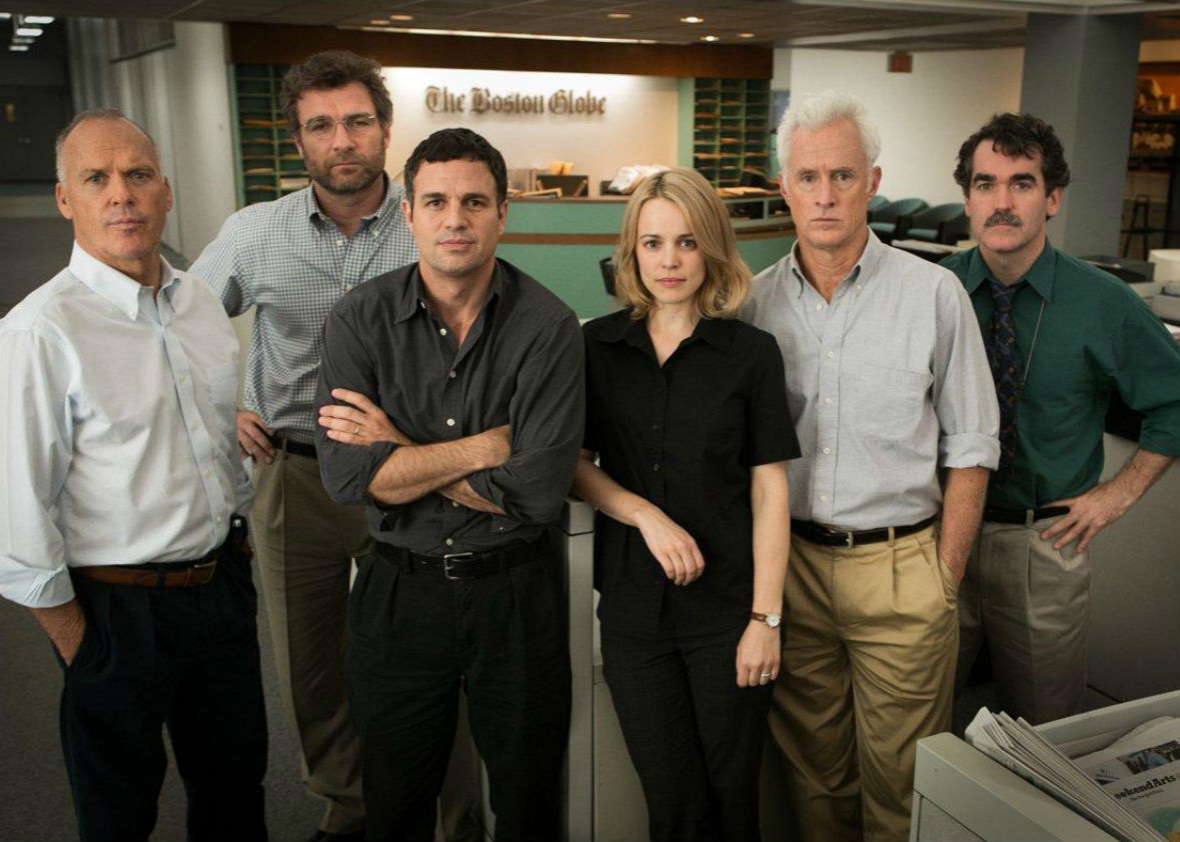
With about 4 weeks until the Academy Awards, I’m still watching these highly lauded films to be as knowledgeable as I can. I still have a bit of a list to watch, but I have made some good progress and I think I will make it. I just wish the Academy would make it a little easier on me by sending me screeners of all the movies. But one of the most recent that I was able to catch was Spotlight. It tells the story of how the Boston Globe shined their Spotlight, also the name of their long-running investigative unit, onto the cover up of abuse by priests in the Catholic Church. You can read a great article on the Boston Globe’s website about how the real story unfolded and how it was transformed into a movie.
In a nutshell, the Spotlight team was lead by its editor Walter ‘Robby’ Robinson (Michael Keaton), who was born in raised in Boston. His team of reporters: Michael Rezendes (Mark Ruffalo), Sasha Pfeiffer (Rachel McAdams), and Matty Carroll (Brian d’Arcy James) who were all known for their reporting skills followed the leads and uncovered the ugly truth. The investigation took five months, and countless hours, but the finished product was a story that would change so much.
Over time, there have been many jobs that have been held in high esteem. I’m thinking of pilots, astronauts, police officers, and firefighters. While some of those jobs have lost their luster in the public eye, we have not seen a fall from grace quite so drastic as that of the Priest. Going back to the middle ages, the Priests were among the most highly educated people in a given city or town, and as a Christian, it disgusts me to even think about the scandals that have plagued the Catholic Church.
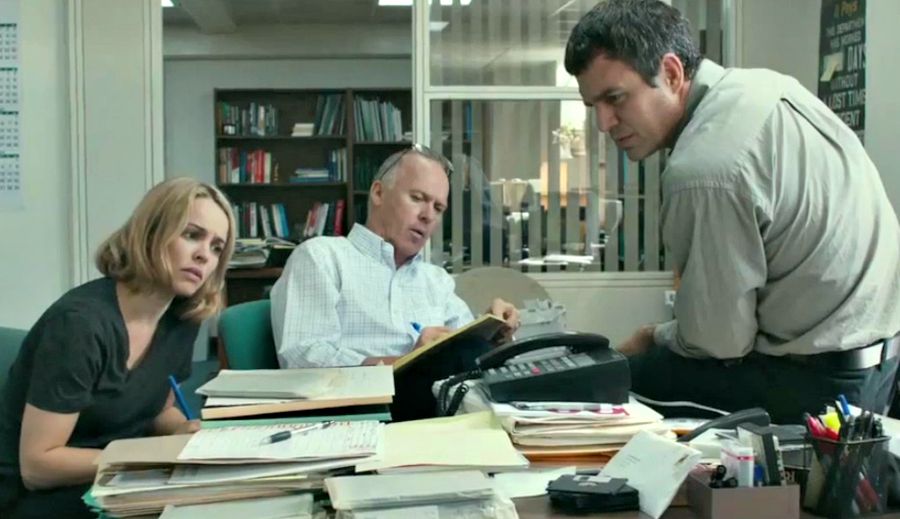 A few isolated incidents of priests (or pastors) falling into sin is unavoidable. However, the story that Spotlight tells goes deeper to reveal the ugly truth that the Catholic Church as an institution collaborated to cover-up these incidents, protect the offenders from justice, and create an environment where further atrocities could take place. This pains me as a believer knowing that we are all fallen and corrupt people in need of grace, but I can only imagine the collective effect that these scandals have had on the church (Catholic and Protestant alike) as non-believers and marginal attenders have left in droves in the past decade. An article at Salon.com reveals that, “Catholic defection is the single greatest factor driving the much-heralded rise of the nones, who now account for just under 23 percent of the population. Almost one-third (28 percent) of nones are former Catholics, the single largest share of any religion.” I hope Churches, organizations, and businesses will learn from this story and know that when something like this happens it affects a lot of people, and they must understand that some bad press is not as important as a person’s life and emotional well-being.
 Oddly enough, reporters have perhaps lost just as much respect as priests but for a completely different reason. I mean, how much more respect can you get than being the job that Superman choose to do as his alter ego. But I miss the day when news was actually news. Why does anyone care that Kim Kardashian and Amber Rose are having a feud over a couple of selfies and social media posts? Why was Tom Brady sentencing and appeal over “Deflategate” headline news while Greece’s economy was tanking and Turkey was stepping up to fight Daesh. This film reminded me that journalists used to investigate and break real stories. I hope that the pendulum swings back to the American people valuing the reporters that tell real stories that impact the community and not which celebrities just broke up.
 Channeling great films like All The President’s Men and Network, Spotlight, written by Tom McCarthy and Josh Singer, honors the account of events with their writing but never loses sight of the story they are telling. The writing is outstanding. They don’t have any agenda in this film except telling the story. I was afraid that as this subject was handled in film we would see a vilifying of the Catholic Church. On the flip side, it was also good that they didn’t try to make heroes out of the Boston Globe. It felt like they tried to be completely unbiased while writing the story. It could have been very easy for this film turn into a Lifetime or ABC Family movie and be a manipulative mess, but instead it became a polished and well-wrought film.
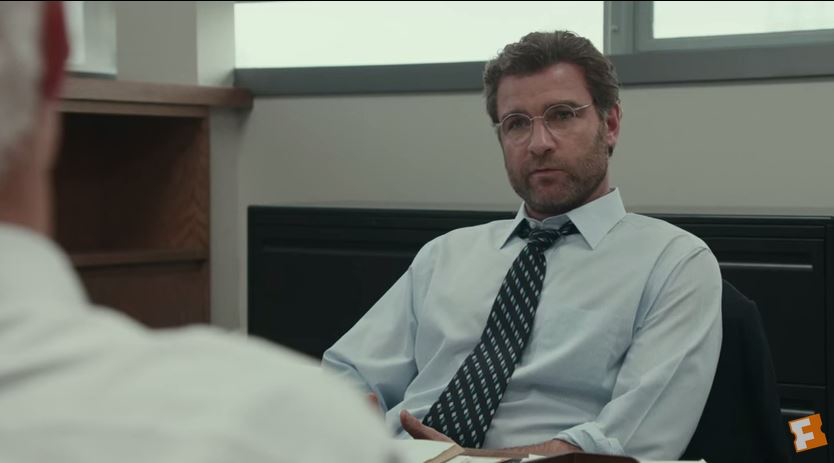
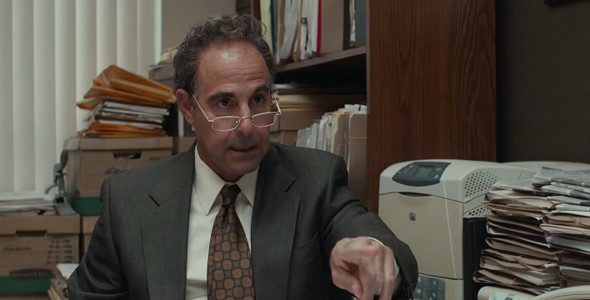 McCarthy, also the director, lets his actors and the shocking truth take center stage. Mark Ruffalo gives a fantastic performance as a highly driven investigative journalist and has really been knocking them out of the park lately. Michael Keaton also gives another awards season-worthy performance as the leader of the Spotlight team. Stanley Tucci was amazing, though I don’t think Tucci is capable of giving a bad performance. Also, Liev Schreiber gives one of the best performances of his career. His turn as Marty Baron was calm and understated, but he takes charge in every scene he’s in, which is saying something considering the caliber of the other actors and actresses with whom Schreiber shares the screen.
Spotlight is one of those movies that will stand the test of time and is deserving of the awards credit that it is receiving. I really enjoyed this film as it takes the time to deal with a heartbreaking story that needs to be told. Everything from the writing to the acting is amazing. I doubt that Spotlight will make it to the top of the Oscars heap, but it definitely deserves to be widely seen and given all of the praise that we can give.
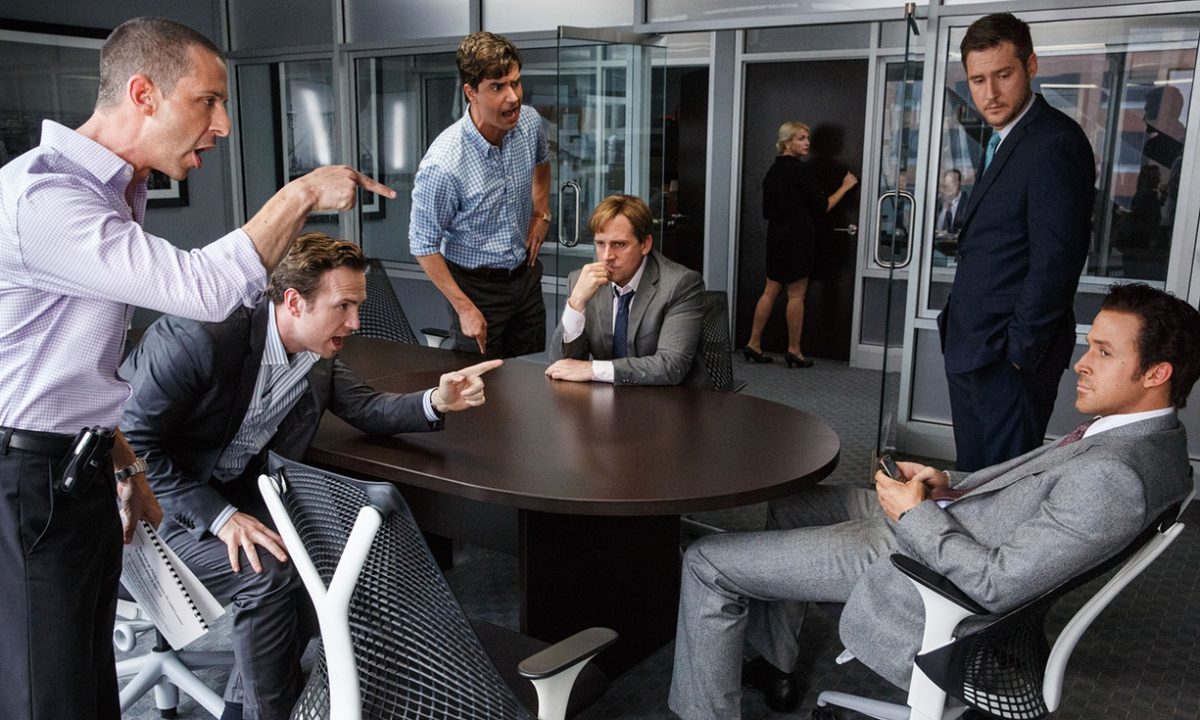
 The Big Short is set in the years leading up to the financial meltdown of 2008 and tells the story of a handful of investors who saw it coming. Bitter humor (primarily delivered by an excellent narrator in Ryan Gosling) guides us through an educational journey that ultimately ends in tragedy (for everyone but our protagonists). The housing market is usually a rock-solid investment. But these guys read the signs and started suspecting that it was a skyscraper built on sand and it was getting ready to collapse. The “experts” of the day told them that it was impossible, That it couldn’t happen.
 There are jump cuts, slow motion, foreshadowing and flash backs. The filmmakers use any and all tricks to explain a complicated mess of financial underhandedness in order to help the audience understand, because as our narrator tells us, “Mortgage backed securities, subprime loans, tranches… Pretty confusing right? Does it make you feel bored? Or stupid? Well, it’s supposed to. Wall Street loves to use confusing terms to make you think only they can do what they do. Or even better, for you to leave them the f*** alone.” The banks, mortgage brokers, the credit ratings agencies and the government manipulated people in the nation and world into investing in worthless packages of bonds, and it behooves the director and writer, Adam McKay, to use all cinematic tricks to explain and untangle the financial corruption. The miracle is that the film deciphers the economic melt-down well while entertaining its audience.
 It would probably be a good time to compare this film to two other recent films which addressed similar issues but in very different ways. First you have the over the top Martin Scorsese film, Wolf of Wall Street. That film became known for the number of F-bombs it dropped while attempting to make the world of investing look cool. Then there was the Oscar winning documentary by Charles Ferguson, Inside Job. It had a cool narrator in Matt Damon, but you almost needed a degree in Finance to follow along as they explained the crisis and spoke to experts. I feel like Adam McKay sought to walk a like between these too films, it is not over the top in an attempt to be cool, nor is it preachy and heavy handed. It reminds me of a heist movie in the vein of Ocean’s Eleven, the casino gets taken for all it’s worth, but in the end the house still wins.
 I’ll let you watch the movie for yourself to get to know the awesome characters that McKay develops for us. As a middle-class worker, I could not have less in common with these guys, but dang it if I didn’t feel myself rooting for and empathizing with them. We’ve got a socially backward fund manager who blasts death metal in his office. The two young guys who started on their own fund while they were still in college. Knowing that they are out of their league, they call in the investing giant turned reclusive doomsday-prepper. Then there’s the hedge-fund manager (and his team) with a bad attitude toward banks.
 Russell hopes for a Jennifer Lawrence hat trick with Joy, but unfortunately, this time his delicate balloon pops. It’s a movie about a lower middle class single mother rediscovering her creativity, her fight not to be exploited by the world of commerce or her dysfunctional family, and about the birth of QVC and the show-business of retail sales. However, Russell (who shares story credit with Bridesmaids co-writer Annie Mumolo) doesn’t quite figure out how to tell these stories at the same time, or even back-to-back, resulting in a pile-up of characters and incidents and emotions that just never works.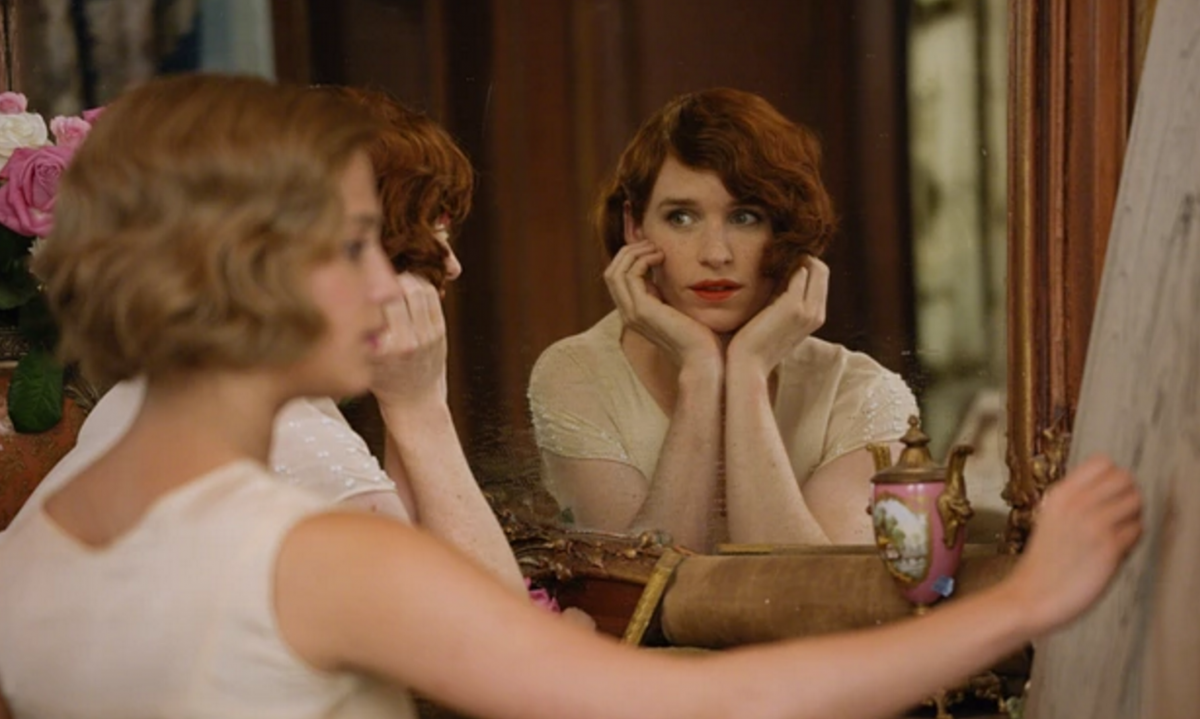
 It’s the mark of a great documentary that it can make you care about something you had no interest in otherwise. That is the reason I loved this documentary, because the fight between Billy Mitchell the jerk and underdog Steve Wiebe is something utterly captivating, and a story that’s continued even though the movie came out in 2007. That’s right, the two are still competing, and the saga continues. Sure, it might not seem like a big deal to us, but to these guys, it’s everything.
 Mitchell’s record stood, undisturbed, until 2005. That’s when Steve Wiebe, who had recently been laid off, decided to accept the challenge to compete with Mitchell’s high score. The most amazing part of the film is the fact that Wiebe’s wife and kids let him engage in what is a very trivial competition.
 But he is one of the best villains I have seen on the screen in a long time. Wiebe, on the other hand, is a guy you can’t help but pull for. We cheer when he bests Mitchell’s score by over 200,000. Then we feel his setbacks when the score is invalidated.
 This one was a fairly easy choice. I don’t tend to re-watch many movies, only those that I really enjoy. But I remember seeing Braveheart in theaters three times when I was only 12. That means that begged my parents or friends parents to take me because I was too young to go by myself. This was the first DVD I ever bought. I watched it so many times in High School that I now have the movie memorized. I’m not sure of my heritage, I’ve never done the ancestral digging to find out where my origins truly lie, but because of this movie, I tell people I’m Scottish. And I am proud to be a Scotsman.
 It probably had something to do with the gory violence, and the comedic writing probably helped as well. But what really got me, I think, was the fact that I was able to lose myself in the film and become William, joining him on his journey.
 Looking back, it has been a while since I sat down and critically watched this film. It does suffer a bit from it’s length as it tends to drag a bit in the 2nd and 4th acts. That would be the background story of Robert the Bruce (little known fact: the title Braveheart was historically attributed to him, not Wallace.), and the love affair with the princess, which is total historical rubbish (she would have been in France at the time and only about 13 years old) and completely unnecessary, and contrary, to the heart of the film. That being said, this is still a film which I plan on showing to my sons and daughter when they are on the brink of the teenage wasteland. I hope that it can teach them what it taught me. That a life that is lived without purpose is not lived at all.
 I am six days into the 30 Day Movie Challenge and I have remained faithful. But today presents a couple of obstacles. First, it is Wednesday and this is the one day a week that I take my kids to school. I choose Wednesday because that is Chapel day and I can sit with them as they sing and dance. It reminds me of an opening rally at VBS. I am writing this as I wait for chapel to begin, but this will delay me from my blogging time until about 10am. Add to that the very obscure topic for today, and it really does present a challenge.
 I Know My Name is Steven was one that looked interesting, also
  The story-lines involving Porter’s customers and how their lives were changed by him are certainly inspiring, but one must also wonder if they actually did happen. I was most intrigued by the story-line involving the gay couple and an obvious insinuation that one of their friends might have been afflicted with the AIDS virus. This was never resolved and seemed a little misplaced. Also, what is probably the films most quotable line, “God created us all, Shelly. He doesn’t make mistakes,” is in relation to this couple. The fact that this little bit of tolerance propaganda was tagged on kept this from being a really great film. But it doesn’t keep Door to Door from being a really an inspirational story that I still recommended for those who are sick movies about things getting blown up or people getting peppered with bullets.