Every Wednesday, I post a review of a movie which is not new (no less that 2 years since release). In general, these will be movies that I enjoyed watching and in some cases have seen multiple times. This is primarily because, unlike many critics, I don’t enjoy spewing invective. Instead, I like to think about and spend my time on movies that I liked. That being said, I tend to like a wide range of films and I hope that some of my tastes match your own. I will freely reveal major plot points and spoilers in these reviews, but I will do my best to warn you or to [su_spoiler title=”Spoiler Hidden”]hide the spoiler material behind a shield.[/su_spoiler] With that being said, let’s get to the review.
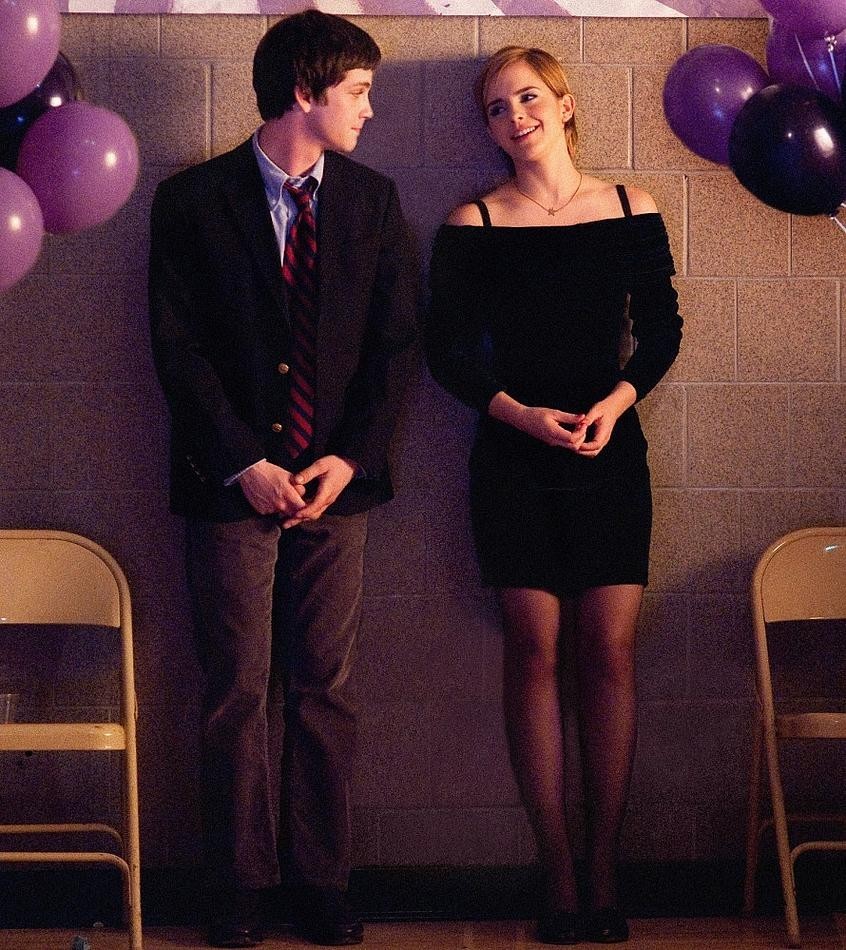
The depiction of high school life in The Perks of Being a Wallflower really isn’t all that different than it was in 1985 when John Hughes’ The Breakfast Club highlighted how even though we are all dysfunctional, we all have worth. In fact, the immortal words of The Breakfast Club’s resident jock Andrew Clark could practically be Wallflower’s chief thesis: “We’re all pretty bizarre. Some of us are just better at hiding it, that’s all.”
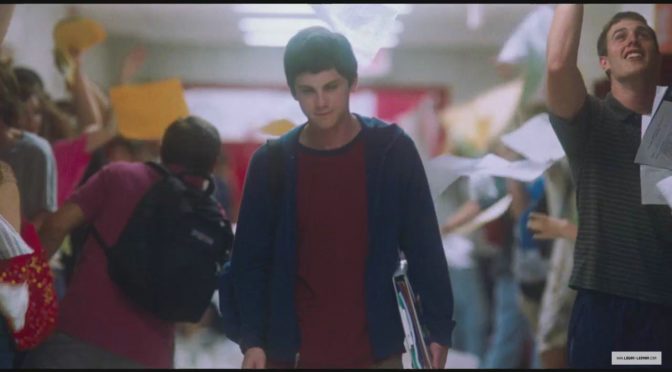
Writer/Director Stephen Chbosky, who also penned the best selling novel of the same name, captures the high school years in all their awkward glory. He definitely has his finger on the pulse of the joys, fears, and angst that most high schoolers deal with. Charlie (Logan Lerman) has already been through a lot outside the classroom. Ever since his best friend committed suicide and his favorite aunt died in a car crash, he’s simply been unable to cope. He can’t seem to shake a sinking feeling of utter hopelessness. Add to that, the bullying, hazing and cruel antics of high school and it’s no wonder then that Charlie already has a running countdown to graduation. Just 1,384 more days, and he’s free.

Logan Lerman is great as the understated lead. I see Charlie as a Holden Caulfield for the MTV generation. He mostly keeps his thoughts to himself and blurts them out passionately and awkwardly when he does choose to express them. Lerman shows something special that was missing from his Percy Jackson portrayals in this nuanced performance. He refuses to make Charlie pitiful when he has every right to be. I could not help to get knots in my stomach as he takes each step forward with uncertainty. It just feels genuine like the rest of the film.
The movie takes place around 1991, before cellphones and social media monopolized teenage communication. This absence underscores the incredible generational divide that has opened up in so short an amount of time. Check out the clip below to get a sense of the emotional climate of the movie. There are definitely funny portions, but overall, this is a gut-wrenching film which wrestles with a very complicated time of life. Perhaps it just rings true to me because I was a misguided 90s teenager listening to 80s bands and looking for my place in the world.
Charlie embarks on his first days of high school as an old soul who has no friends apart from his English teacher Bill (Paul Rudd) who feeds him tons of great books to continues to feed his love of reading and writing and provide him some guidance along the way. Bill is one of my favorite characters and he gets to answers the ultimate question of a teenage boy, “Why do some girls settle for losers?” Profoundly, he states his answer in a way that I think guides the rest of the story, “We accept the love we think we deserve.”
Soon however, Charlie stumbles into a group of friends who are just as messed up as he is. None of them are particularly good influences, but they give him something that he’s been looking for… belonging. They include the wise-cracking, constantly philosophizing homosexual Patrick (Ezra Miller) and the angry punk-rocking Buddhist Mary Elizabeth (Mae Whitman). But the most influential is the girl. All of you guys know what I mean when I say the girl, she makes him forget some of his troubles and pushes him to be the best version of himself. Being a big fan of Harry Potter and especially Emma Watson, I was excited to see how she did on her first non-Hermione role and she was stunning. The camera loves her and she even nails the American accent.
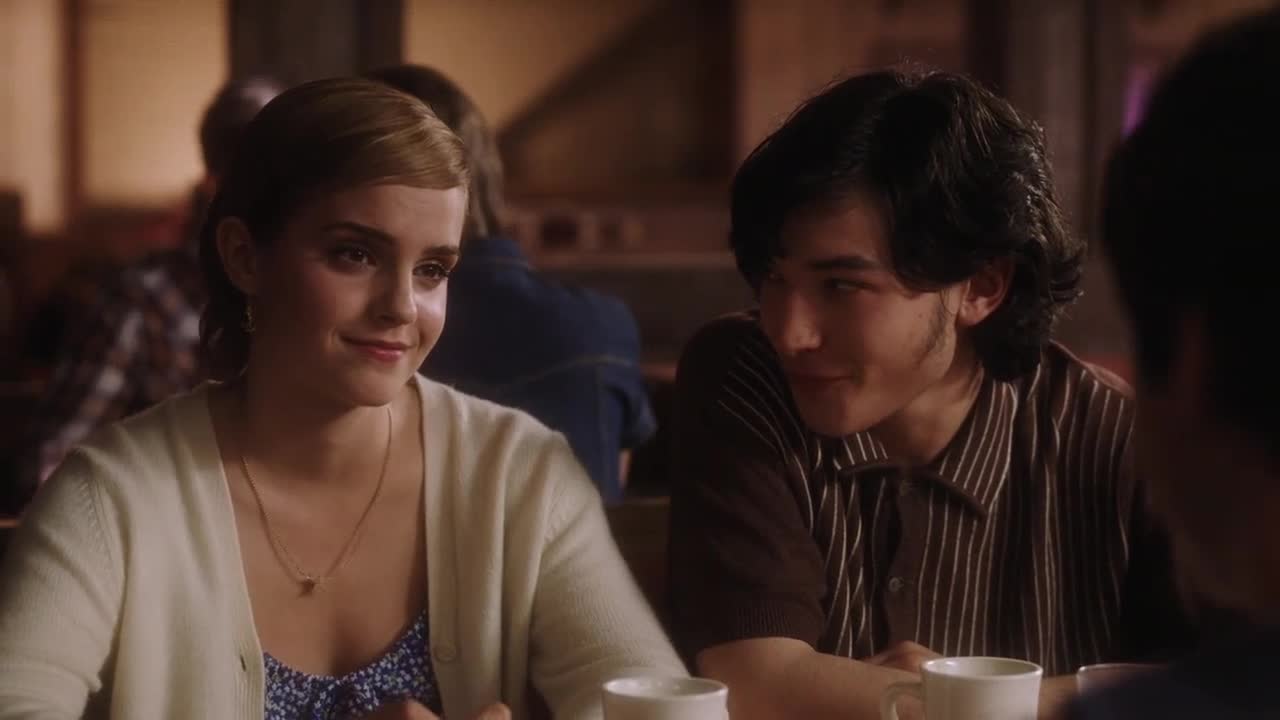
This girl named Sam takes an interest in Charlie’s well-being and welcomes him to the “island of misfit toys,” where they can all “be psychos together.” Charlie describes Sam as “the kind of pretty that deserves to make a big deal out of itself,” but Charlie is immediately drawn to the fact that she doesn’t see herself that way. She seems out of place with this group until we learn her background and realize that like some of The Breakfast Club, she just does a better job at hiding her dysfunction. Naturally, he falls for her, even though she’s three year his senior and is currently dating a jerk who is more than a few years older than her.
As the credits rolled I felt somewhat uplifted, even though it is a dark film. Its PG-13 rating comes from sexually suggestive scenes (mainly springing from the groups’ fascination with the Rocky Horror Picture Show), heavy themes (including sexual abuse), and drug use. It’s fair to say the film’s content is less than wholesome. But the content alone shouldn’t determine the value of a work of art. The important thing is the way the film interacts with, speaks to, and frames that content that really matters. It is from this perspective that I think The Perks of Being a Wallflower is an excellent movie.
For the characters, salvation comes through love and the conscious decision to enjoy life in the moment. Though faced with the unbearable darkness that often finds us in life, these characters find healing as they cling to the love they share and find meaning in the moments in which they feel most alive. Some of the most memorable scenes involve Sam and eventually Charlie standing up in the back of a pickup, arms spread and head back, listening to just the right music, as they speed through a tunnel. They are embracing the meaning of life as it hits them in that moment, and this meaning carries them through the dark moments. Too often, we let life’s unbelievably rich moments pass us by as we focus on trivialities or get so caught up in finding a grand purpose that we miss the meaning and glory in the small things. Perks of Being a Wallflower is one of those small things. Don’t let it pass you by, and keep the tissues close.











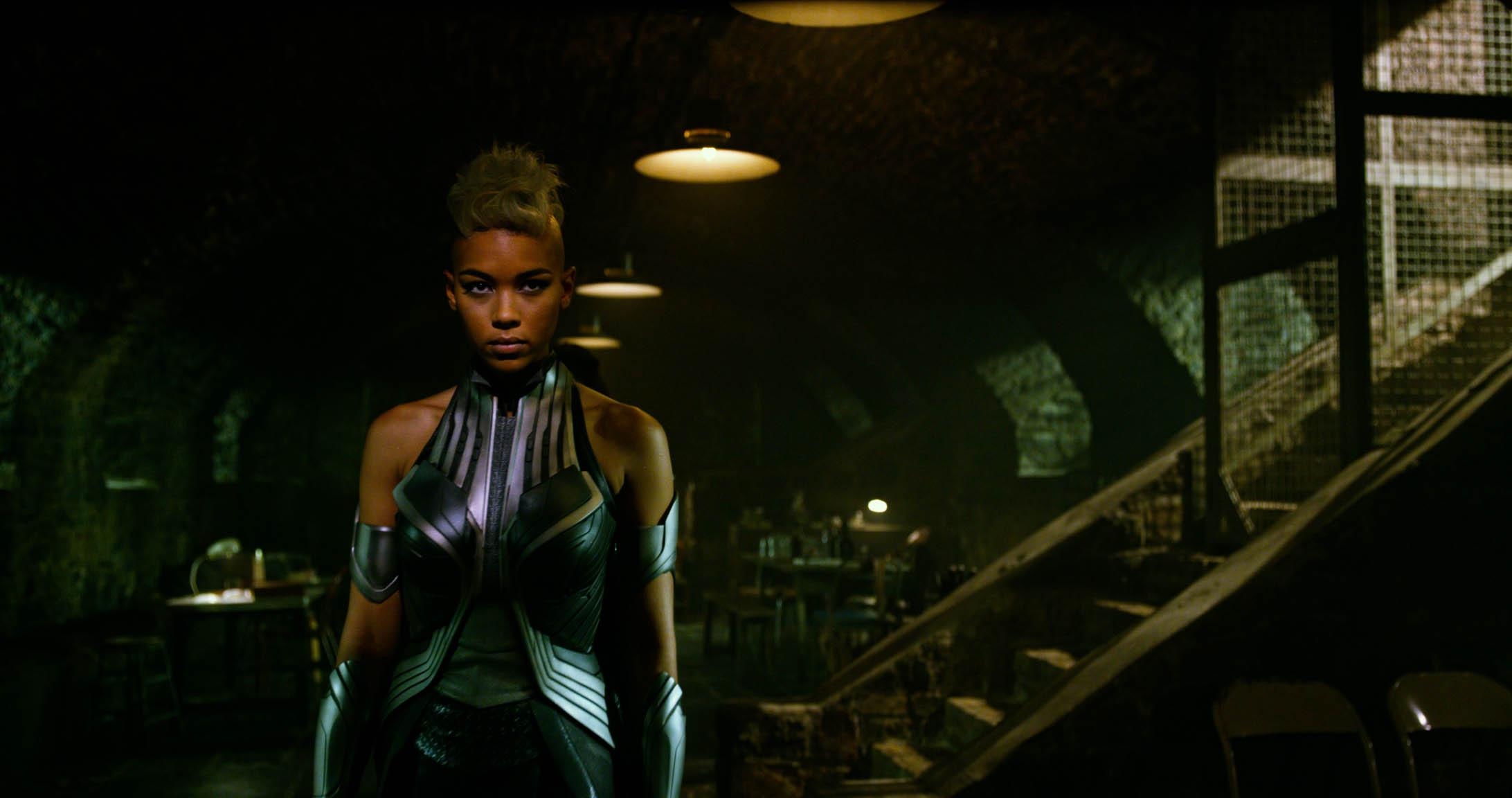









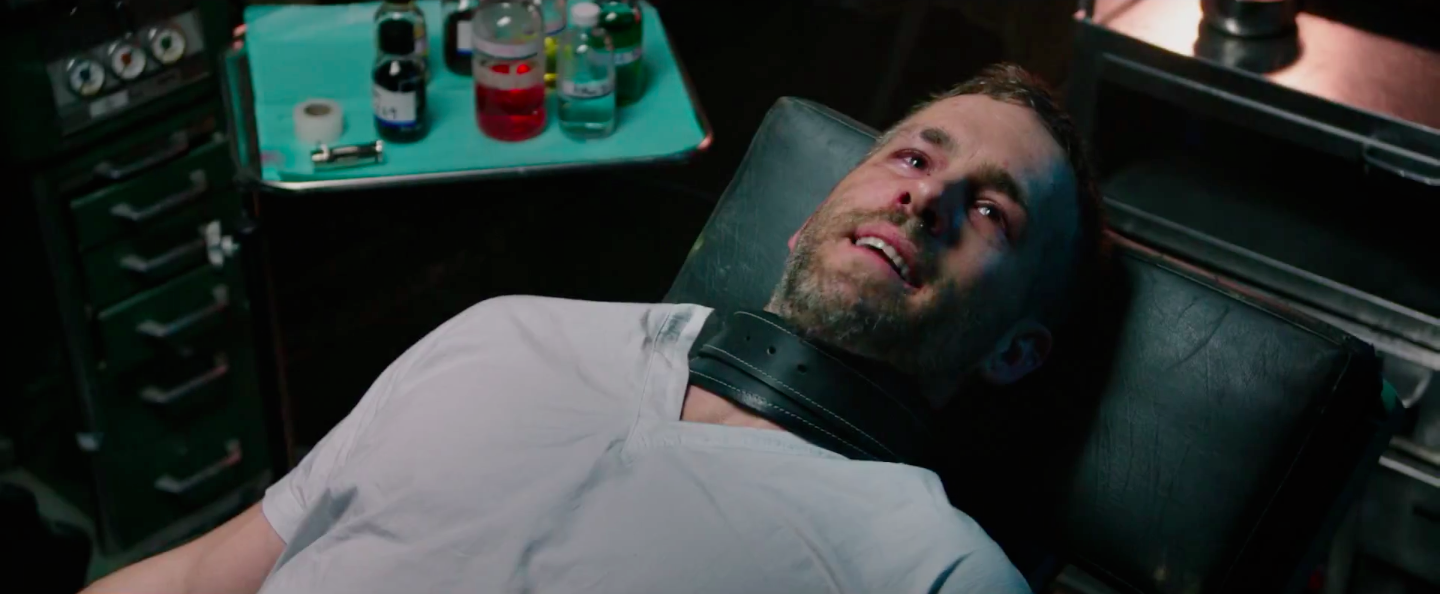
 Blind Al and her relationship with Wilson makes sense and makes me want to see more (no pun intended). I think more could have been done to the connection between Colossus (who feels like a big jab at Green Lantern showing that a CGI character can work) and Deadpool than the implication that they’d discussed Wade’s joining the X-Men before, but the dynamic amongst that trio including Negasonic Teenage Warhead (who they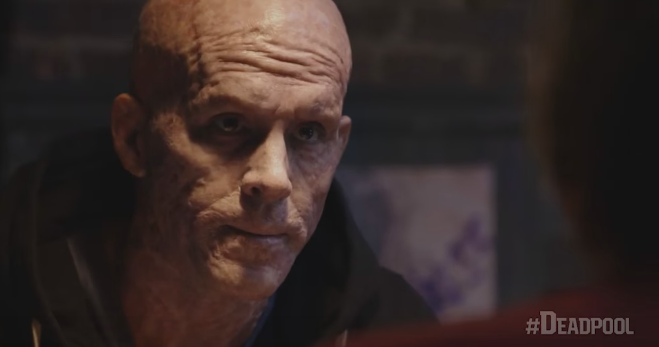
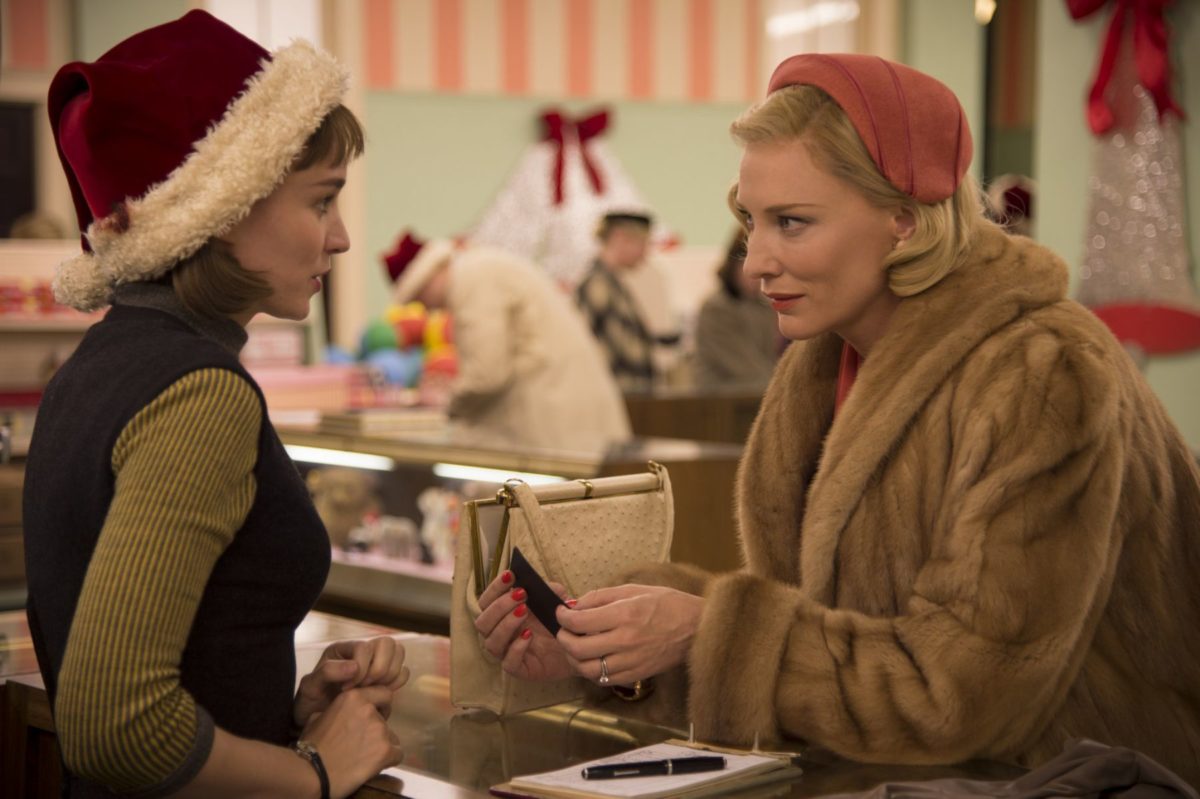
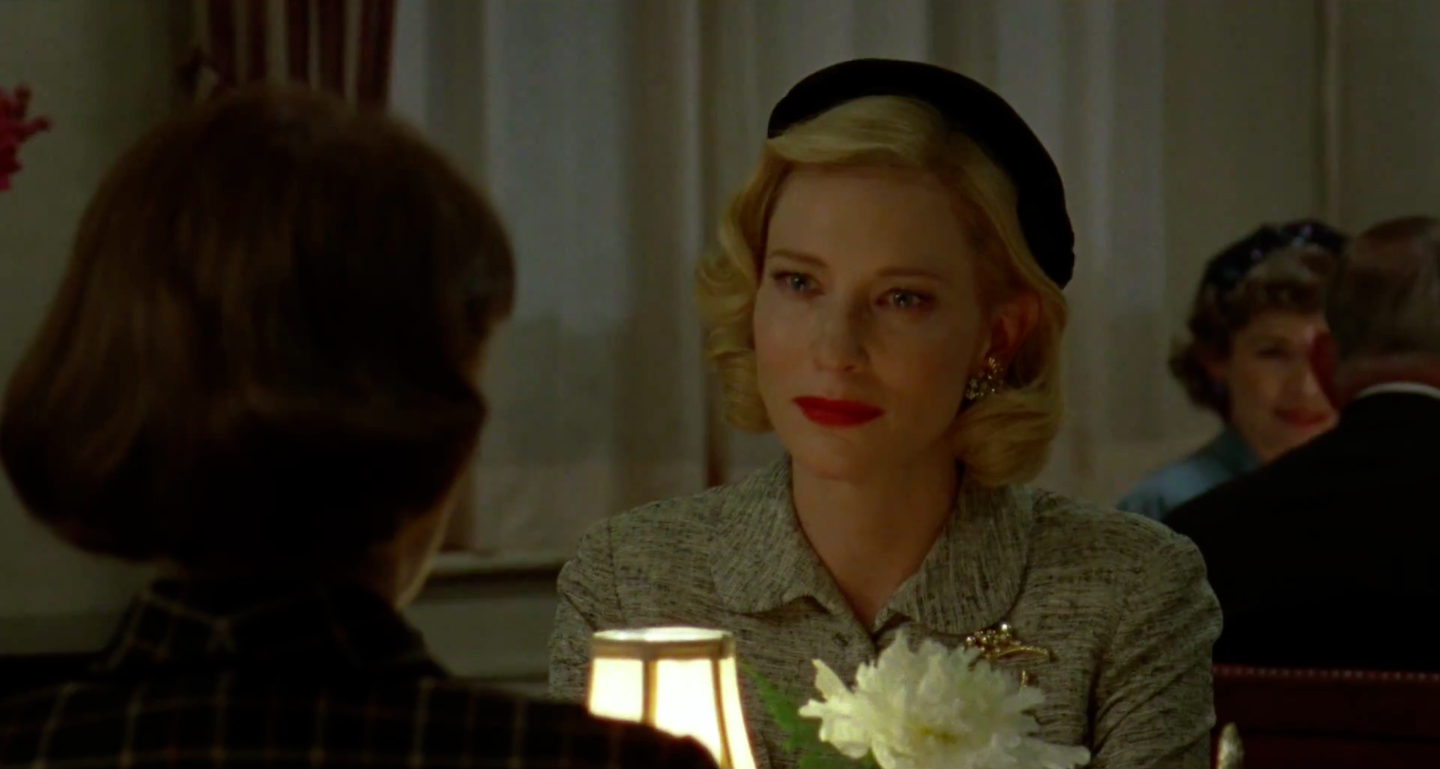 Carol is a fictional story based upon a novel written by Patricia Highsmith. This is the same author who wrote The Talented Mr. Ripley and Strangers on a Train. The novel, “The Price of Salt” was written under a pseudonym, Claire Morgan, perhaps because Highsmith was concerned about the backlash of writing a lesbian love story in 1952, but almost certainly because she drew so much of the meat of the story from her own life. Read how
  One day, a woman in a mink coat drifted into the toy department. Highsmith later recalled, “Perhaps I noticed her because she was alone, or because a mink coat was a rarity, and because she was blondish and seemed to give off light.” Like Alfred Hitchcock, Highsmith was captivated by frosty blondes, all the more so if they were married and rich. The shopper, who slapped her gloves into one hand as she scanned the merchandise, made Highsmith feel “odd and swimmy in the head, near to fainting yet at the same time uplifted.” With an abstracted air, the woman, Mrs. E. R. Senn, bought a doll from Highsmith.
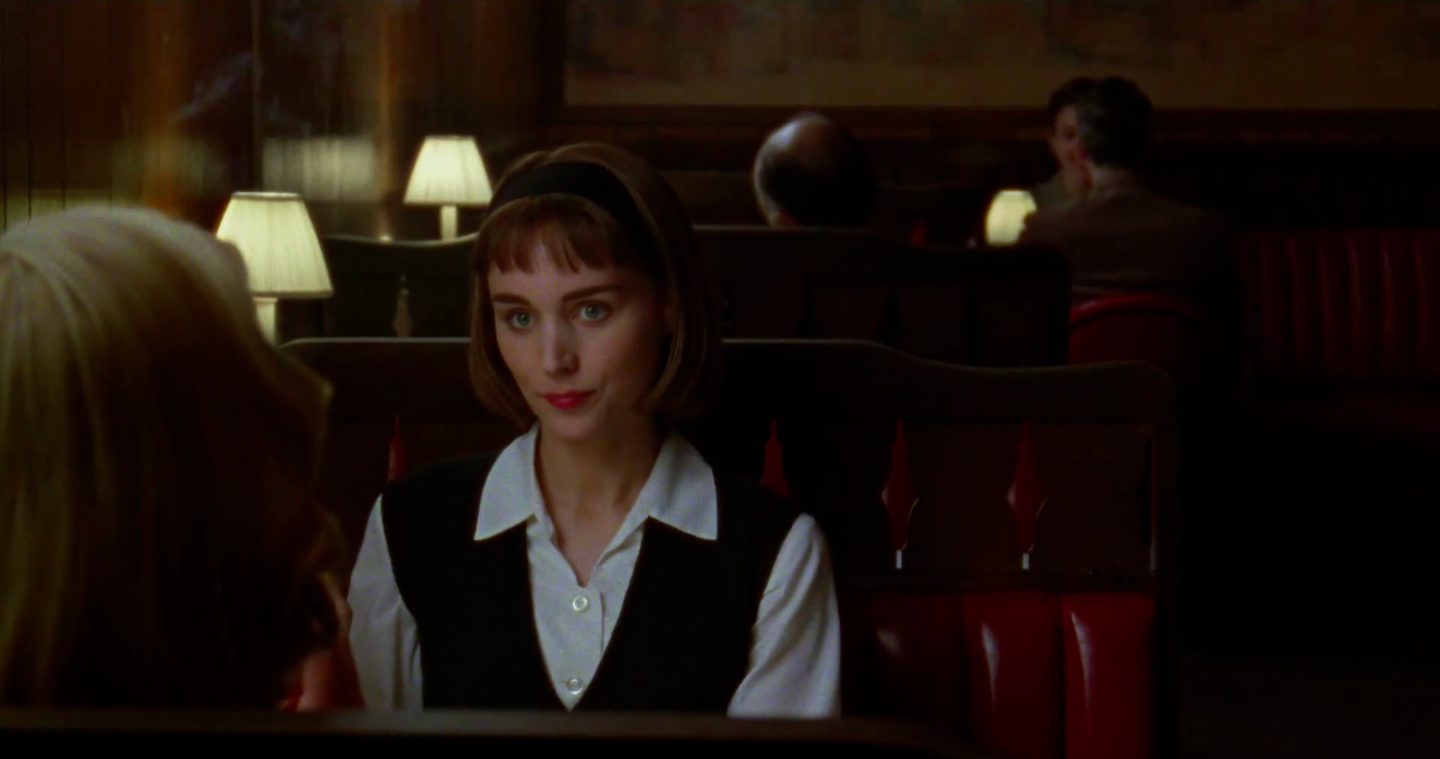
 So you now know the basic story behind Carol. A doe-eyed young shopgirl struggles with her identity as she befriends and begins to fall in love with an upper-class older woman going through a difficult divorce. It is such a simple premise for a film, and in today’s world of legalized gay marriage and homosexual characters on seemingly every television show it could have felt trite and boring. But this is not a 2016 retelling of a 1950s story. This is a 1950s film, and if we were able to take a Delorean back to 1955 and present Carol it would be apparent that this film is right on the cutting edge.
 I’m not sure why this movie is titled Carol. To me, Carol (Cate Blanchett) had a much less interesting role in the film than that of Therese (Rooney Mara). Therese grows before our eyes while Carol is set in her ways before we ever meet her. Certainly, both characters stories unfold before us throughout the film, but if I had to pick a lead and supporting character, I’m choosing Therese as the lead. I mean there is no doubt that the author placed herself in the story as her. And although Carol suffers more dramatic hurdles and setbacks I felt much more connected to Therese and her internal struggle.