Your Favorite Movie of All Time – 30 Day Movie Challenge
Whether intentional or not, The Shawshank Redemption is a film about hope, and the redemption that can occur even in the most dark and degrading corners of our world. This engrossing film stands as one of the most entertaining, thought-provoking dramas of this century. It takes us to a disturbing setting, uses raw language, doesn’t present us with ideal role models, and there are numerous brutal, occasionally fatal, beatings. But we are not cast into this dark place to incite our own lust or rage. The film clearly shows us that these things are harmful or wrong. Because to tell a story of redemption; you have to sink to the depths before you can rise to the pinnacle. When the darkness is hellish, the light shines ever more brightly. Simply put, this film couldn’t have been made without these elements.
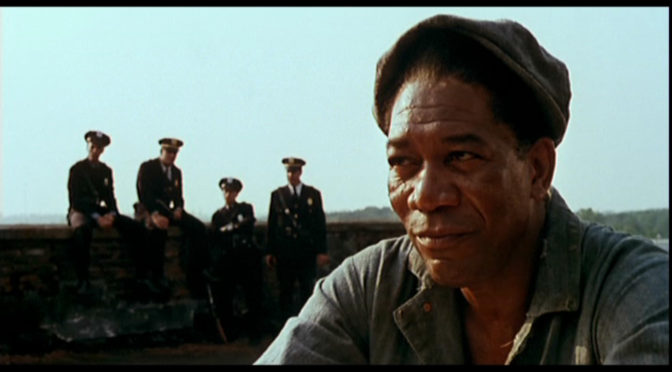
Our hero, Andy Dufresne (Tim Robbins), is wrongly accused of killing his wife and receives two life sentences. Steadily and quietly in prison, he wards off the bitterness against that injustice and the further hardships he suffers by doing good for others, even those that despise him. When the film’s narrator Ellis Boyd “Red” Redding (Morgan Freeman) first sees Andy arrive, he wagers that the tall-but-quiet ex-banker is a guy who won’t last long. Red loses the bet, but as he gets to know Andy, he begins to respect him and the two become friends and help each other survive the long and dark days of incarceration.
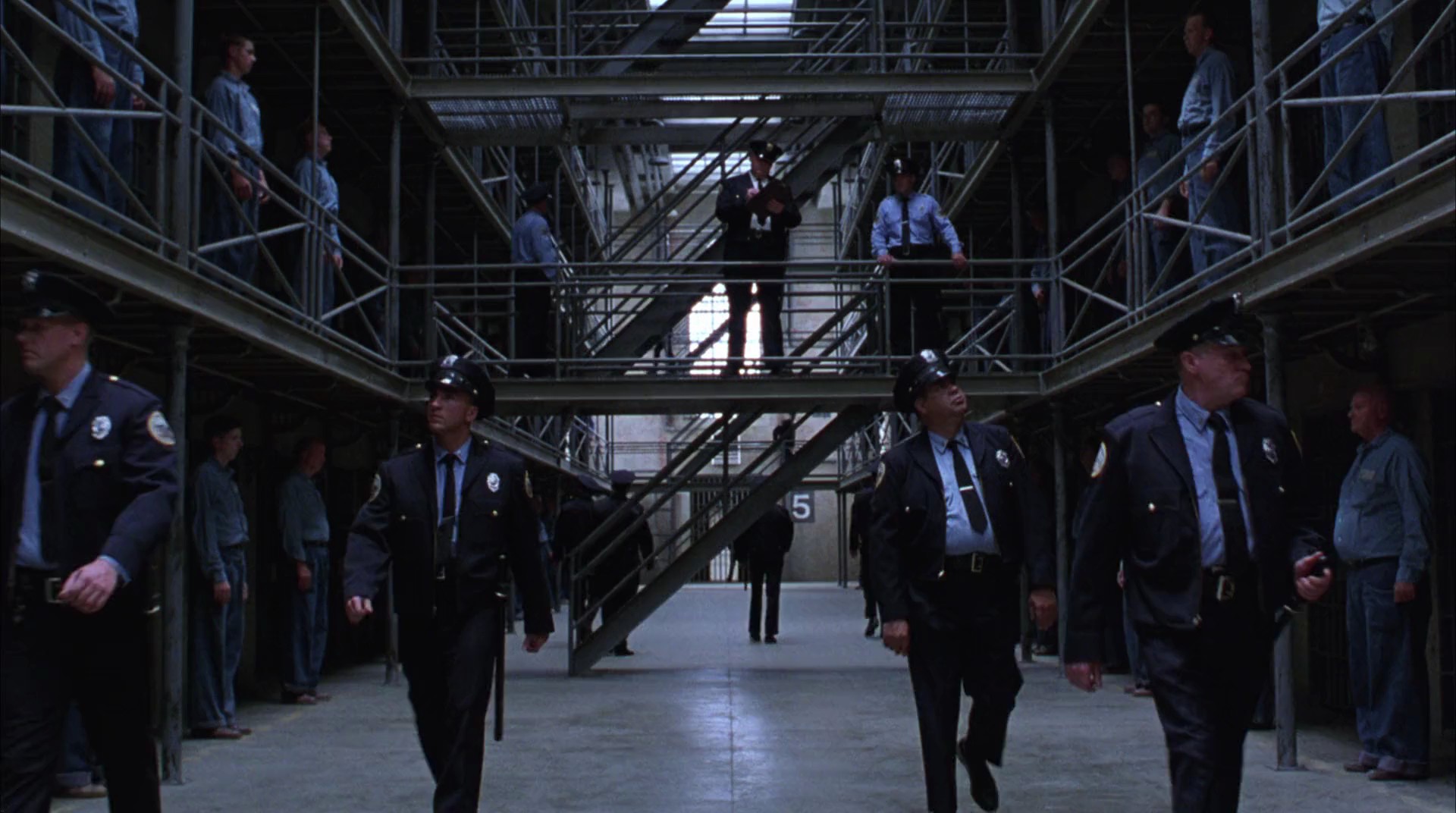
The prison warden (Bob Gunton) is a hypocritical “Christian” who uses the Lord, the Bible, and the people for his own scheming, murdering purposes. We are meant early on to see through this painted on veneer as shown by his “welcoming” the prisoners to Shawshank, “I believe in two things: discipline and the Bible. Here you’ll receive both. Put your trust in the Lord; your ass belongs to me.” This is not the cheap-shot characterization that many believers have come to expect from Hollywood. If you are turned off by the warden, it is because you are meant to be. Just remember who it was that had our sinless savior crucified; it was the conservative religious coalition of the day carrying out a sinister plot in order to maintain its own political power.
In fact, there are many similarities between the heroes of The Shawshank Redemption and the Gospel. The central characters are both wrongly accused. One receives two life sentences and the other is crucified. Neither are respected by their contemporaries, Andy is s a banker and Jesus is a Nazarene? While Andy is certainly flawed, the good work he does while in prison actually serves a ruthless political end that ends up holding him captive. Jesus was ridiculed and executed by the same people He came to free.
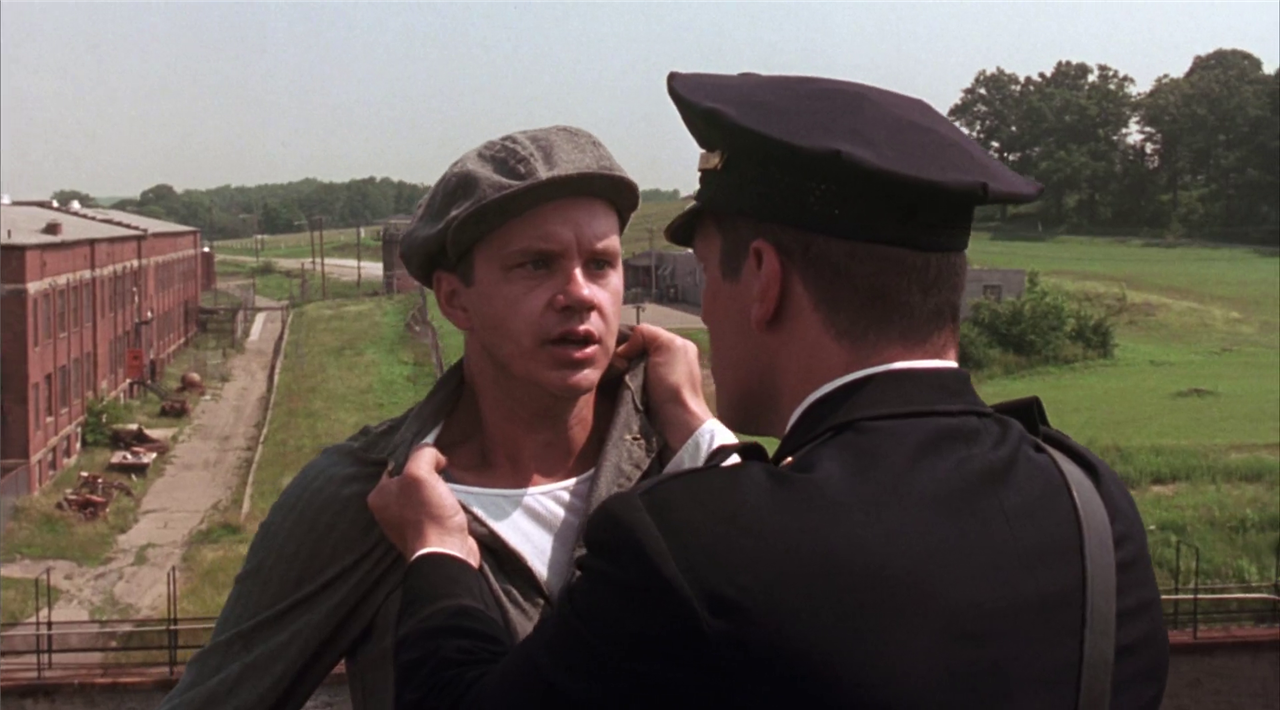
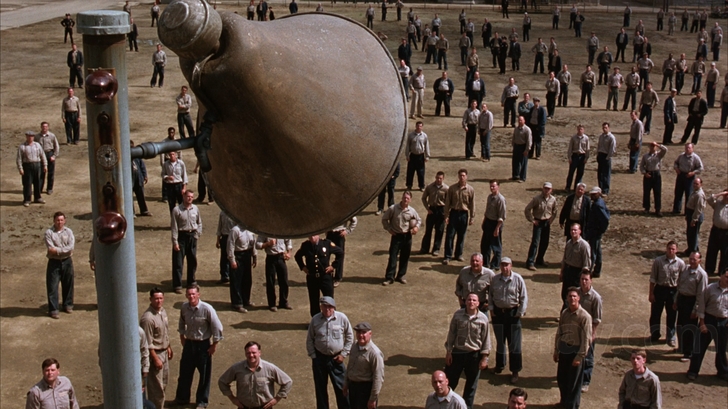
The characters are believable, the actors sink into their respective roles perfectly, and light up a brilliantly executed script. But it is the cinematography (crafted by the Coen Brothers’ go to guy, Roger Deakins) that provides the all important look of the film. Thick walls, imposing fences, and confined spaces remind us of the oppression. The guards relentless marching and the heavy bars slamming open and slamming shut reinforce it. Dull, chipped walls in every room surround the dulled, chipped lives of utterly hopeless men. But director Frank Darabont isn’t content to linger in the darkness. Hope is scattered throughout, from an Italian opera broadcast over loudspeakers to a senate appropriation for library books. From a cold beer after a days work to the thought of a “place of no memory.” From High school equivalency exams to a harmonica. From Alexander Dumas to Rita Hayworth.
*—–SPOILER ALERT—–*
Hope triumphs gloriously in the end. It only takes 19 years. But when Andy escapes the hard way, he makes it possible for his friend to go an easier way. Andy escapes the bonds of prison like Jesus escaped the bonds of death. Andy disappeared with an invitation for Red to join him much like Jesus told us that he was going to prepare a place for us. There are so many pictures of Christian hope in this movie that they couldn’t help but put the central message of the gospel in the title.
What is your favorite movie of all time? What do you think of Shawshank? Am I going overboard with the Christian allegory? Leave me a comment below. Also, with the 30 Day Challenge coming to an end, I am here at work for an overnight twelve hour shift. That gave me plenty of time to stamp out my last challenge and hopefully to fill in some of the gaps that were left when life or technology got in the way. I’ll let you know on Twitter or Facebook if I update any of my older posts. Follow me there to keep up with me as I continue my journey through the ever-changing IMDB Top 250.
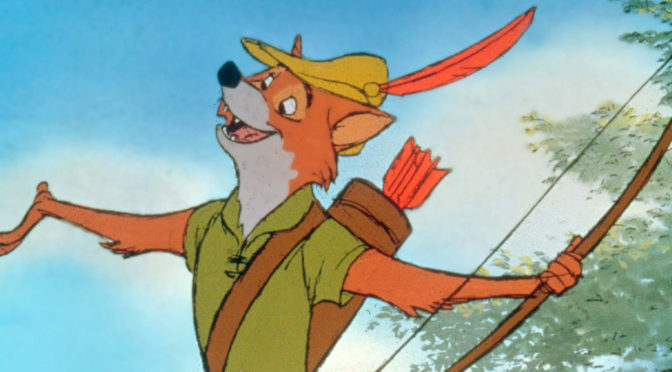
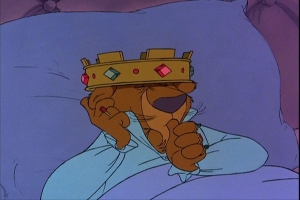 Looking back, as an adult and a film snob, I can see that the picture is notorious for its corner-cutting animation, it simply doesn’t have the sparkling hand-drawn detail of earlier Disney masterpieces, or the glitzy sheen of the latter ones. It’s certainly one of the more crudely-drawn productions of the company. But even when you stack up the complaints lobbed at this incarnation of the Robin Hood tale, they really don’t matter, because in the end we get a richly entertaining good time, and I’m glad to say that this film is just as captivating to my children as it was to me.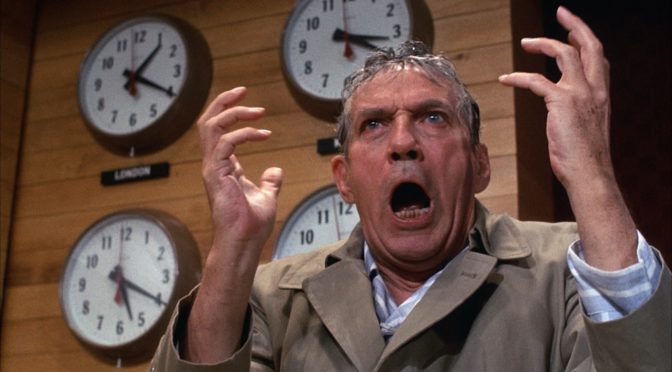

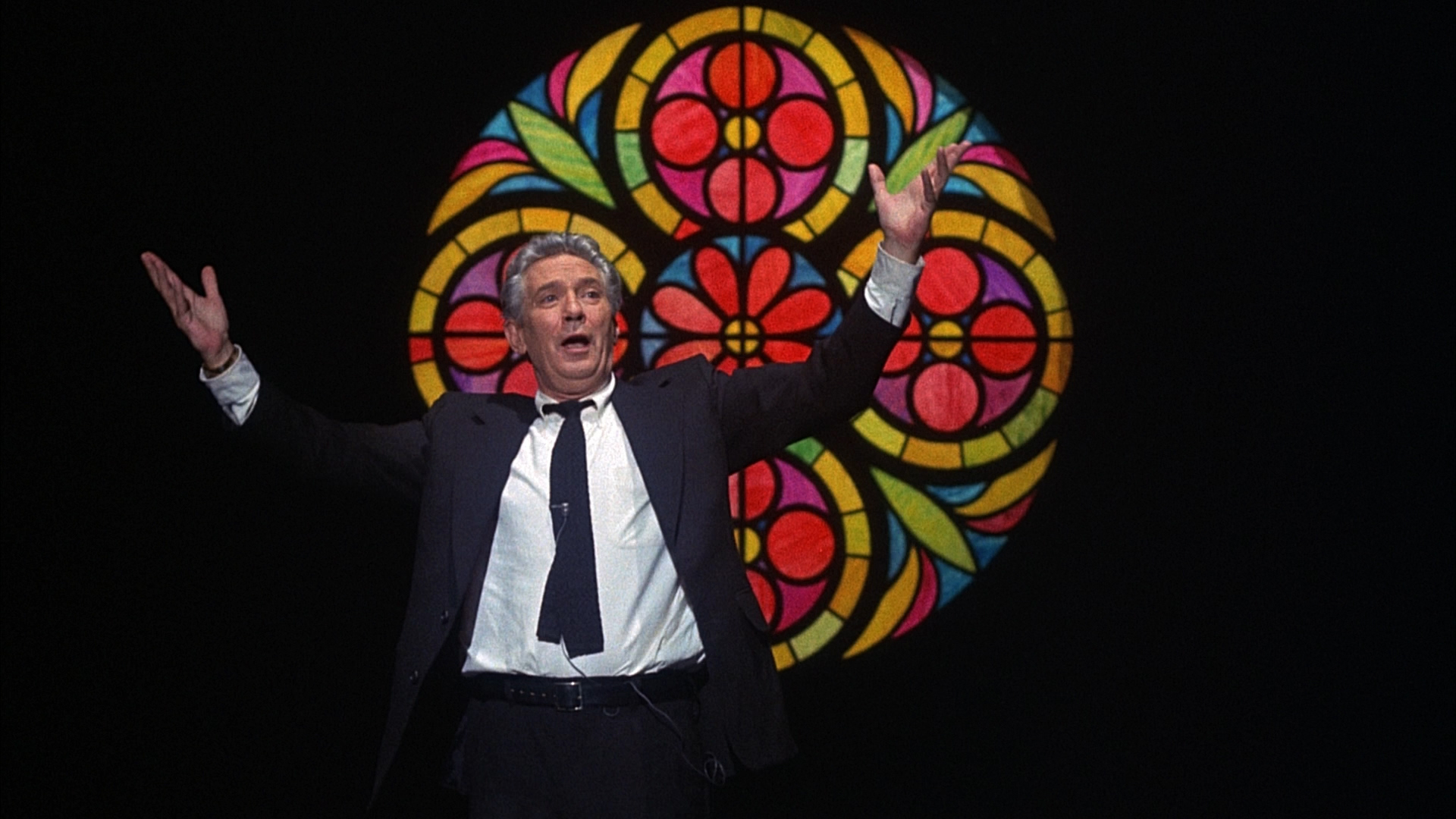
 Frank Hackett’s (Robert Duvall) character is also the future of television. He could not care less about the news division or even the quality of the network for that matter. He is a CCA (The Communication Corporation of America) man. This is the company that has purchased UBS and as far as Hackett is concerned UBS exists to serve the interests of CCA and it’s shareholders. And to that end he approves of Diana’s programming schemes once he sees the ratings skyrocket. Mind you, this film was made in 1976, years before all the cable “news” networks even existed and way before we had people willing to give up their privacy and what little dignity they have left on national television just to be recognized and become reality show “celebrities”.



 I didn’t expect a period price about 1970s TV news anchors to be funny. I remember seeing the previews back when Austin Powers was in his heyday thinking, “This is a cheap knockoff. Somebody trying to make money by getting in on a popular idea.” I didn’t even see Anchorman: The Legend of Ron Burgundy until relatively recently. But it immediately became one of my favorite and most quoted movies. It’s impossible not to laugh at this massive skit that is a perfect blend of left-field jokes and uncomfortable sexist humor. I was certainly not a Will Ferrell from the comedies he produced before Anchorman. I was so unimpressed by the Saturday Night Live skit based films that he did, like Night at the Roxbury, that Old School, Elf, and this film all flew under my radar. It wasn’t until I saw Stranger Than Fiction that Will Ferrell really got my attention and I began to look back through his filmography. And found that he has remarkable comedic timing and a way of fluctuating between over the top and deadpan deliveries that really translates well to the screen.
 But his crowning achievement is the creation of this fictional San Diego legend. You see, in the Seventies, men read the news. And the movie tells us that in San Diego, no one read it better than Ron Burgundy. In fact, he reads so well off the teleprompter that he’ll read anything (and I mean that). Burgundy rules the local news arena with the help of his crack news team. All men of course, but when the network forces the station manager (Fred Willard) to hire a female reporter, the sexy Veronica Corningstone (Christina Applegate), the men fall into a panic. And the world that they have come to know and love will never be the same.
 Anchorman is a wealth of wickedly stupid humor, the type that’s so dumb it could only ever be thought up by someone intimidatingly smart. That smart duet is Ferrell himself with his co-writer/director Adam McKay, who has teamed up with Ferrell three times since (Talladega Nights, Step Brothers, and The Other Guys). Ron Burgundy is hopelessly juvenile, terminally inappropriate, and so completely unpredictable that he’s also ridiculously funny. I will wager that this is the only film in which you will find someone shooting flames from the end of a jazz flute. But Anchorman is always willing to take things a few steps farther than you’d expect. The result is comedy which produces unstoppable belly laughs simply from the shock of where Ferrell takes the joke next.
 Possibly even more hilarious than Ferrell is his capable news crew. Steve Carrell as Brick Tamland repeatedly doubles me over with insane comments that seem to just come from out of the blue. He shouts, “LOUD NOISES!” when everyone else is in the station manager's office complaining about the addition of Corningstone to the news team. Paul Rudd’s reporter on the scene Brian Fantana is worth seeing just for his musk collection. Even Christina Applegate gets in a few good shots, because she is willing to dish out just as much as her fellow cast mates can throw at her. David Koechner is the weak point as the cowboy hat wearing sportscaster Champ Kind as he just made me uncomfortable. My biggest wish for this film would have been to see John C. Reilly in that spot.
 I get the feeling that half of this script was improvised on the spot, and that isn’t a bad thing. I wonder if once they got rolling on set, they just couldn’t stop. The talent pool on this cast was so deep, I can totally believe that at some point they simply abandoned the printed page after realizing they were coming up with better stuff just giving each other the giggles. And with cameos from people like Tim Robbins, Luke Wilson, Ben Stiller, Jack Black, and Vince Vaughn the comedy chemistry and laugh factor is wrenched up even higher.
 I’m a little wary of this question. It seems like the person that started this challenge may be sitting in an office in Hollywood waiting for all of us film geeks to get to day 24. Then when we post our great ideas he steals the ideas for his own and presents them to his boss. Perhaps I’m just paranoid, but I’m not sure if I want to put my great idea on the internet for everyone to see. Perhaps if I post it here with a time-stamp and a copyright at the bottom of the page that will be sufficient to prove that it was my idea before any one else. Well, I’ll live on the edge and throw caution to the wind and tell you all, but you have to promise to at least give me free screenings to your movies that will make millions after you steal my idea. It really is a simple concept and all the technology to make it happen already exists. In a sentence, I’m talking about audience interactive plot control or Choose Your Own Adventure.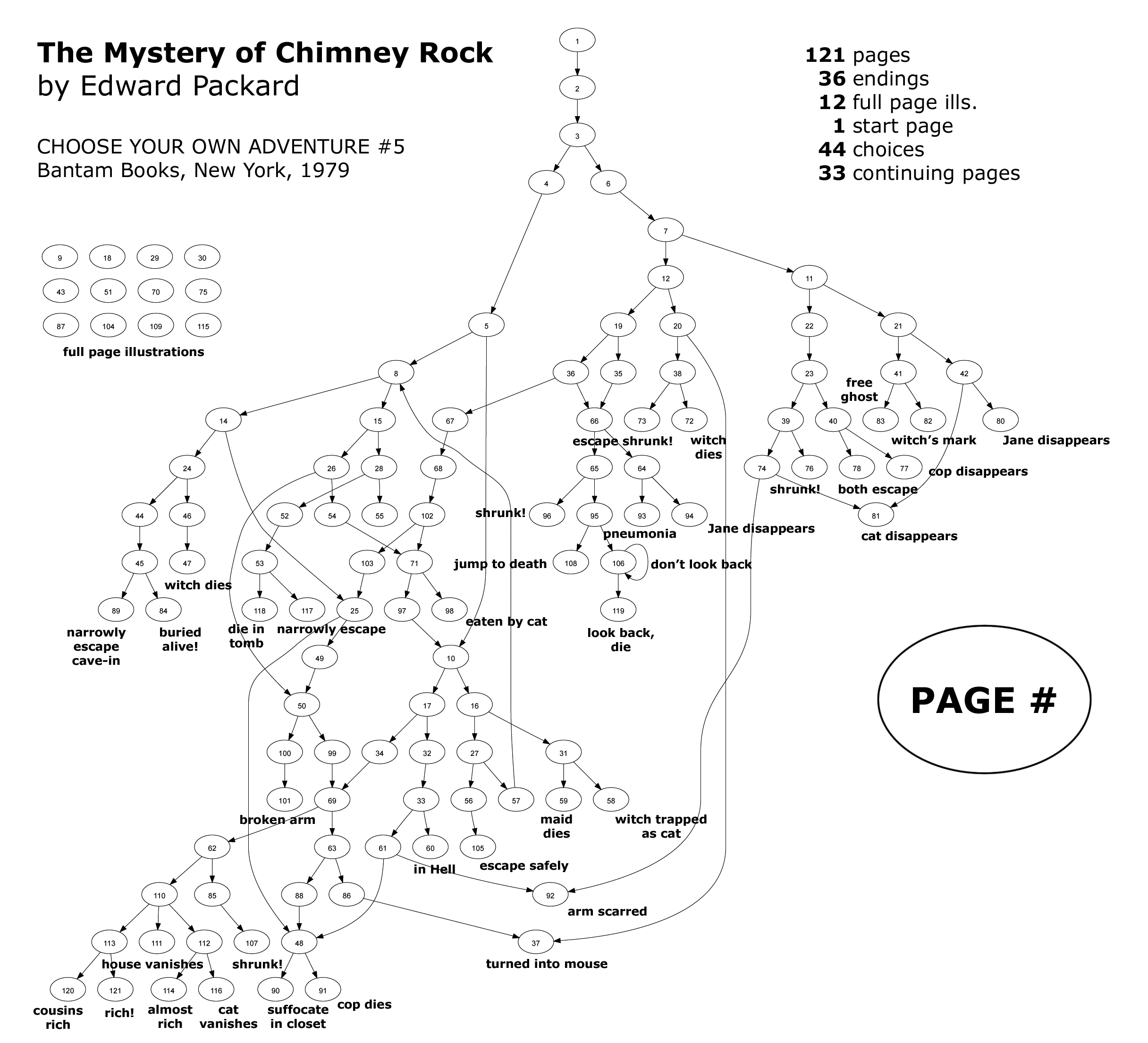

 Being a dad, it seems like I watch more animated movies than any other type. And since I am a film snob, I can’t stand to endlessly re-watch sub-par movies the way that I see so many parents do. Just because Cars is my kids’ favorite Pixar movie, that doesn’t mean that I am going to put it on every time they ask to watch a movie. Although they would be happy with that, I would go insane. And even if it was a good movie, it would lose some of its magic after seeing it twice a week for 3 years. I am constantly looking for good animated films to share with my family. That passion, along with my general love for film, led me to the breathtaking and impressive canon of Japanese hand-drawn animation director
  But Miyazaki is a glowing exception. His animation has an attention to detail that rivals the exacting standards of a company like Pixar. His intense yet delicate shading of colors would make his works of art more at home in a fine art gallery than in the Sunday comics. Miyazaki also has a great sense of humor, a gift for poetic storytelling, and a taste for adventure. His beautiful children’s movie, My Neighbor Totoro, is a charming and deeply affecting look at how a child’s imagination helps her endure a time of private fear and sadness. His most recent work, Ponyo, is a beautiful story of the transforming power of love. Princess Mononoke, is a powerful, sprawling epic about the need for humankind to respect and live in harmony with the environment. And that is a message that people of all faiths should proclaim.
 Spirited Away is a coming of age story of a little girl named Chihiro, who gets lost in a wonderland of spirits and witches, and her quest to find a way to break the curse that has transformed her parents so they can return home. Her only friend in this world is a mysterious boy named Haku who helps her to survive. Eventually we come to hope that Chihiro, her parents, and Haku will all eventually break away from the harsh tyranny of the powerful and dictatorial witch Yubaba.
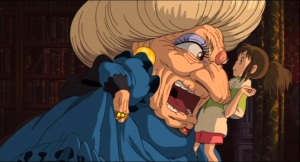 One of the things I love about Miyazaki is that he never sets up a simplistic face-off between good and evil. He knows we all have good and evil within us, and thus his “villains” have moments of kindness, and his heroes do things they regret.
 Some will say that this film is too complex for children, and too scary. For small children, possibly. They could get lost in the intricate plot, and the monsters might scare them. I personally showed it to my kids starting at age 5 and up. But I think kids should be challenged to think through what they’re watching, and this is a story that provides great opportunities for discussion with grownups. Spirited Away is at times frightening, but it emphasizes the importance of an individual’s virtue, and affirms that the smallest of characters can make a big difference. It offers powerful displays of sacrificial love. And it, as I mentioned before, portrays “villains” who are redeemable and can be transformed by compassion and kindness.
 One spirit in particular, No Face, appears at first to be gentle and friendly. But he becomes more and more mysterious, shifting between gentleness and violent destructive behavior. Eventually, we come to understand that he is a lonely spirit who seeks approval. When he is around greed and evil, he responds with greed and evil. But when he is offered friendship and unconditional love, he seems to try a better path. Chihiro has patience with him and her kindness reminds me of how Christ patiently endures with me in my own tendency to become self-absorbed. He waits patiently, always offering love, forgiveness, and direction to a better way. No Face is amazed at Chihiro’s virtue. And I came to hope that he would abandon his violence and follow Chihiro to a better life. This is just one of many such parables within a vast tapestry of interconnected stories.
 It’s the mark of a great documentary that it can make you care about something you had no interest in otherwise. That is the reason I loved this documentary, because the fight between Billy Mitchell the jerk and underdog Steve Wiebe is something utterly captivating, and a story that’s continued even though the movie came out in 2007. That’s right, the two are still competing, and the saga continues. Sure, it might not seem like a big deal to us, but to these guys, it’s everything.
 Mitchell’s record stood, undisturbed, until 2005. That’s when Steve Wiebe, who had recently been laid off, decided to accept the challenge to compete with Mitchell’s high score. The most amazing part of the film is the fact that Wiebe’s wife and kids let him engage in what is a very trivial competition.
 But he is one of the best villains I have seen on the screen in a long time. Wiebe, on the other hand, is a guy you can’t help but pull for. We cheer when he bests Mitchell’s score by over 200,000. Then we feel his setbacks when the score is invalidated.