Almost 30 years ago, a nearly unknown filmmaker named James Cameron created a science fiction masterpiece that changed the genre forever and became a landmark film with long reaching influence. As a pure action movie, Aliens is as well constructed and paced as any in Hollywood history. Let’s take looks back at James Cameron’s Aliens, one of the greatest films of our generation.
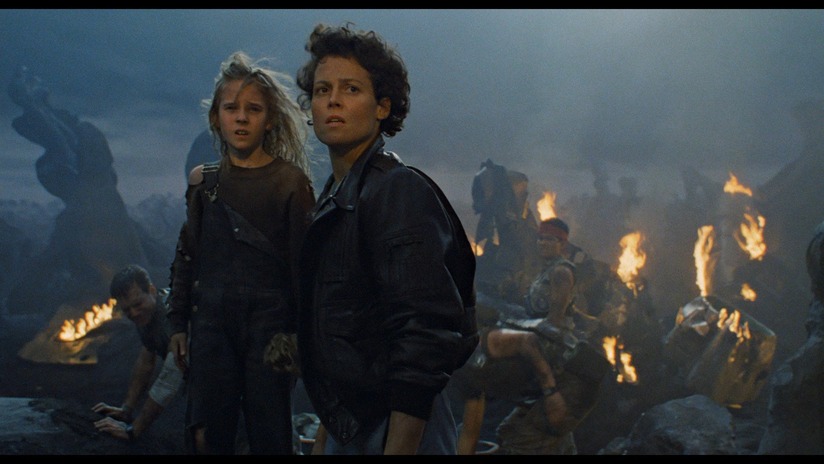 Aliens is set 57 years after the events of the first film. It begins with Ripley being rescued & revived from hypersleep after drifting in space far longer than she ever expected. After hearing her account of what happened to her former crew on Nostromo, the panel board turns down her story, revokes her space-flight license & makes her aware of the colonisation of the planet LV-426, where the alien spaceship was found in the first film. Things set in motion when the contact with the colony on planet LV-426 is lost and Ripley is requested to join a group of space marines to investigate which she, after initially refusing, finally accepts in order to face & overcome her fears.
Given the task of following up Ridley Scott’s Alien, a lesser director would have simply provided more of the same. Another ship, and another crew to impregnate, stalk and terrorise by an apparently indestructible alien creature. It’s to James Cameron’s credit that, when he wrote and directed the sequel to Ridley Scott’s original, he chose to strike out on a different path, creating a film with its own tone, pace and themes while still adhering to various visual and narrative laws set up in the first film.
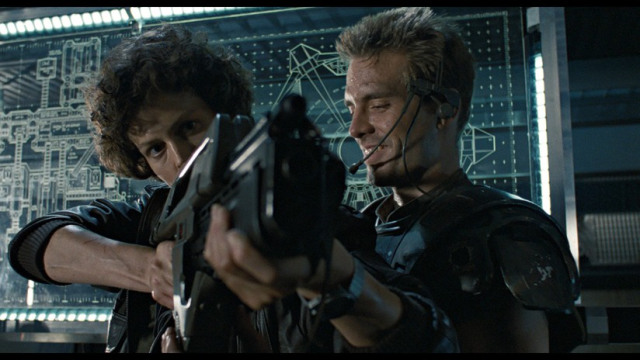 In Alien, we got to know the monster; how it grows to maturity inside an unwilling host, how it bleeds acid, and how difficult it is to kill once it’s loose. In that film, we watched a single one of these life forms tear an entire ship out from under its crew, and no matter what steps were taken to defeat it, the alien simply would not die. In Aliens, James Cameron shows us what an army of them is capable of, and by doing so transforms his movie into more than a mere sequel.
Where Alien was a comparatively slow horror thriller that prowled like a lion in undergrowth, Aliens was a war film that sped from one set piece to the next, slowly building up to a roller coaster of bombastic action. That Aliens is bigger and louder has led some to suggest that Cameron’s sequel is superior to Scott’s original, while others prefer the latter’s reliance on atmosphere and quiet suspense. But I’d suggest that, rather than either being superior, the two films complement one another in a way seldom seen in cinema.
 Alien was metaphor for sex and encountering something traumatic that could barely be comprehended, a monster that violated as well as killed, that rendered its victims chillingly powerless. Aliens is about facing trauma head on, and gaining closure in the process. In Aliens, Cameron quickly establishes that the events of the first film had caused Ripley to lose everything. By returning to LV-426, the now terraformed planet of Alien, Ripley is able to confront the trauma of her past, and in the final battle with the alien queen, ultimately overcome it.
It’s also worth noting that, where Alien was cut off from any sense of society, Aliens gives a greater sense of social order. We even see the ant-like hierarchy of the aliens themselves, with soldier aliens protecting the egg-laying queen. We even learn that the aliens can, in a basic way, be bargained with, as Ripley threatens the queen’s eggs with a flamethrower. With a quiet nod from the queen, the soldier aliens back away.
As a pure action movie, Aliens is one of the best constructed and paced in Hollywood history. Its first hour methodically reintroduces Ripley and the outfit of cocky Colonial Marines who will accompany her to LV-426. Once the action starts however, the film peels back the layers to reveal a display of pure action and suspense. Then there’s Cameron’s endlessly quotable script and broad, memorable characters. Wisecracking space marines have since become a cliché of cinema and video games. Cameron’s, headed up by Hicks, Hudson and Vasquez, are the original and still the best. And let’s not forget about that creepy android (or Artificial Person) Bishop, or the slick company representative Carter Burke. We can trust them… or can we?’
As for this film’s technical achievements, Aliens’ art direction & set designs may not have surpassed the artistic levels set in the previous film but it certainly comes close. However, the one category where this film sets a new benchmark of its time is in its state-of-the-art visual & sound effects. Visual effects are absolutely groundbreaking and that’s one part which has since become a trademark in James Cameron’s films. Sound always plays a big role in combat & horror films and is impressive here as well, be it the sound of guns blazing, aliens shrieking or explosions. Cinematography successfully creates a more evolved atmosphere of what existed in the original film. Editing is cleverly done & it successfully manages to keep the viewers gripped to their seats for 2.5 hours which goes pretty unnoticed. And finally, the score perfectly balances the tone of the film and stays in sync with the film’s content. It’s loud, terrifying, suspenseful & also touching wherever & whenever it’s supposed to be. Splendid work by composer James Horner.
Cameron’s biggest achievement in Aliens was in creating a film that dovetails so perfectly with the original Alien. Watched back to back, Alien becomes the first act to Cameron’s lengthier story. Ripley encounters the xenomorph and all the horror that comes with it in the first film, and through a mixture of circumstance and bravery, is able to put those horrors to rest in the second. This gratifying sense of closure is one reason why the attempt to create a second sequel was always doomed to failure. With Aliens, Cameron had already created an arc for Ripley’s character that was both satisfying and logical, and demonstrated that the aliens themselves, apparently indestructible in Scott’s movie, could be killed after all.
Like Cameron’s later work, Terminator 2, what makes Aliens more than just a sci-fi action thriller is the underlying emotional connection between the characters, particularly between Ripley and Newt. There are also semi-romantic undertones between Ripley and Hicks, but they are wisely kept as undertones. A full-blown romantic subplot would have interrupted the movie’s lightning fast pace. By the climax, we’re not only on the edge of our seats because of the action and tension, but because Ripley, Newt, and Hicks have come to mean something to us. When Newt is taken by the aliens to their nest, necessitating Ripley’s climactic confrontation with the Queen, it ups the stakes even further in a climax that already approaches the harrowing urgency of Alien. And the climactic battle between Ripley and the Queen is not only human vs. alien, but two mothers pitted against each other in defense of their “children.”
Even though many fans will be divided over which is a better film between Ridley Scott’s Alien & James Cameron’s Aliens, there is no denying that both films are masterpieces & immortal for their contribution to horror, action & science-fiction genres. And looking back, Aliens is indeed a perfect follow-up to Alien, not just because it explores the elements of the original beautifully, but also because it places greater emphasis on staying true to the original by following it up with an equally mesmerizing story rather than something made just for financial gains, like most sequels of today. Highly entertaining, immensely satisfying & a spectacular roller-coaster ride of non-stop action, Aliens refuses to age even after three decades and continues to rank amongst the most intense & fulfilling pieces of action films, ever. Although Aliens is strong enough to be a standalone film, it still would be a wiser move to visit the original by Ridley Scott before moving on to this one. Despite their differences, Aliens feels very much of a piece with Alien, and in retrospect, this is where the series should have ended. Unfortunately, opportunities to continue milking a franchise for box office profits often supersede creative integrity, but the shortcomings of the following installments do not diminish what Ridley Scott and James Cameron achieved with Alien and Aliens.
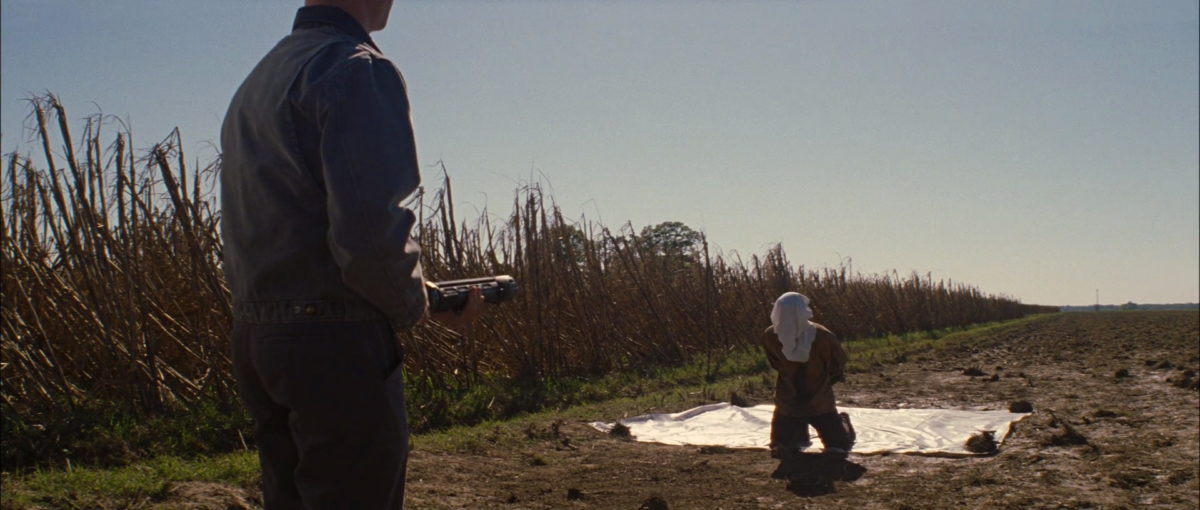
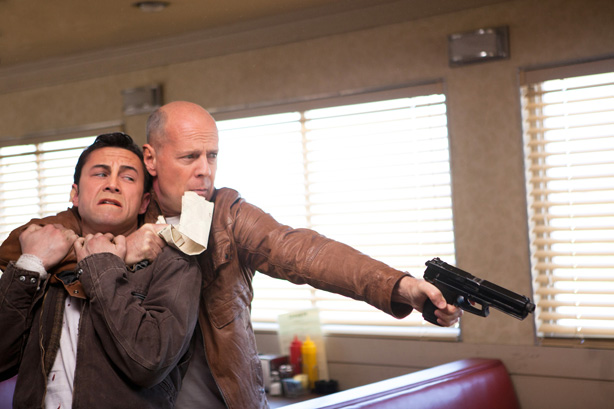 While it is a lucrative career, there is one downside, Loopers are expected to ‘close the loop’ by assassinating themselves. At this point they are given a huge payout and are effectively retired, left to enjoy the remaining 30 years of their life. When Joe’s future self (Bruce Willis) appears before young Joe, he hesitates to kill him, allowing him to escape and forces the younger self to track down the older self and kill him before the leader of the loopers, Abe (Jeff Daniels) finds him. The chase leads the two men to a remote farm, the home to Sara (Emily Blunt) and her son Cid (Pierce Gagnon), where they must finally sort out the ever-growing list of potential paradoxes.
 The cast are uniformly excellent and Emily Blunt and Joseph Gordon-Levitt (with a prosthetic nose which is very convincing in the close-up shots) are as good as you would imagine. It is however, Bruce Willis who is the stand-out. It’s been a long time since Willis has had to show any range, and while he gets to show-off his action chops in a series of scenes that will delight fans of Die Hard, it is in the more emotional scenes that he excels. In fact after the barmy opening act, Looper is strongest when engaging in the depth of character on display.


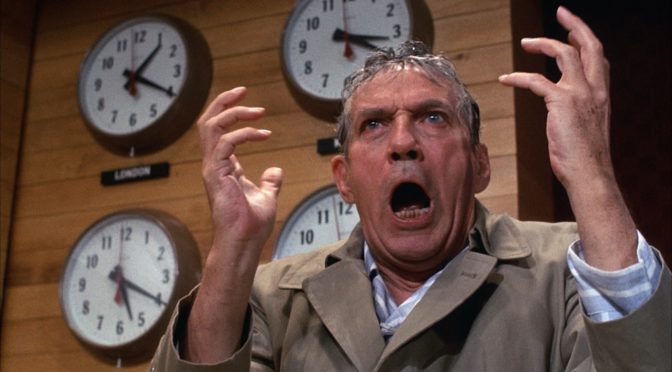
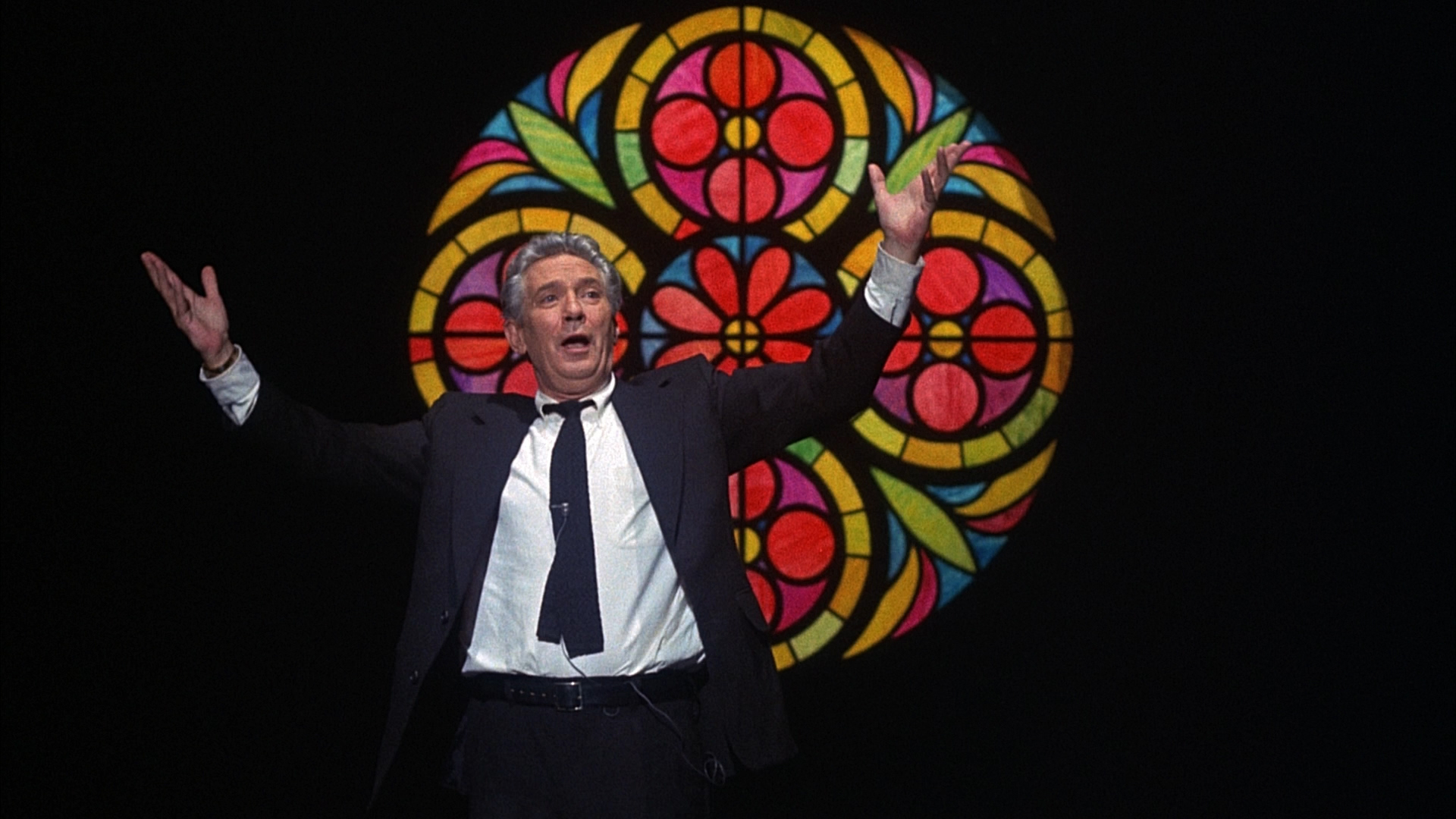
 Frank Hackett’s (Robert Duvall) character is also the future of television. He could not care less about the news division or even the quality of the network for that matter. He is a CCA (The Communication Corporation of America) man. This is the company that has purchased UBS and as far as Hackett is concerned UBS exists to serve the interests of CCA and it’s shareholders. And to that end he approves of Diana’s programming schemes once he sees the ratings skyrocket. Mind you, this film was made in 1976, years before all the cable “news” networks even existed and way before we had people willing to give up their privacy and what little dignity they have left on national television just to be recognized and become reality show “celebrities”.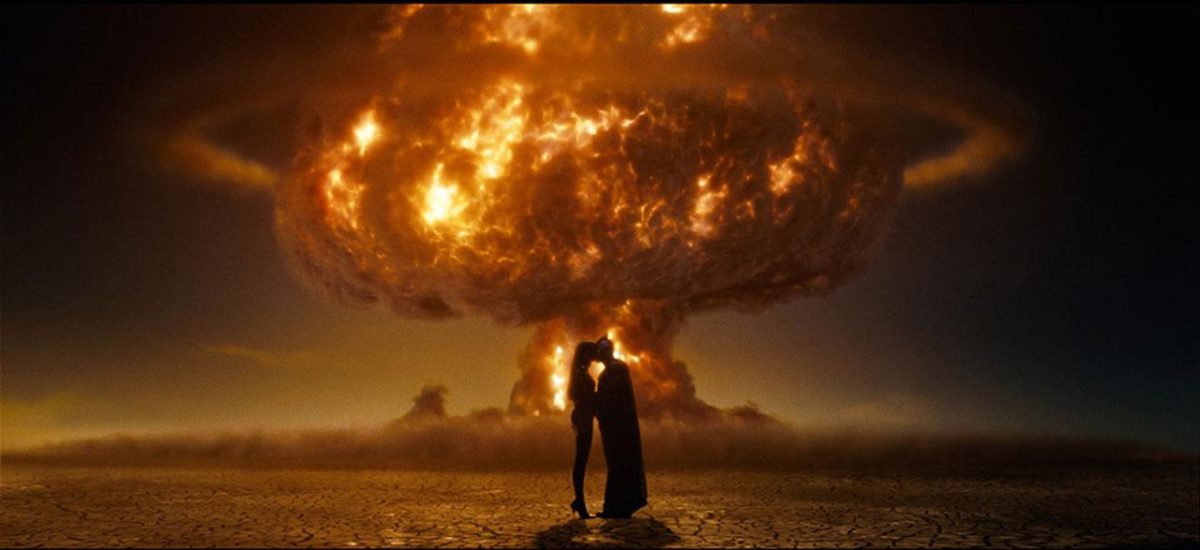


 You would think that with 20 years to work on a worthy follow-up to the Indiana Jones Trilogy that Steven Spielberg and his collaborator George Lucas could create an entertaining and exciting film. However, it seems that instead of becoming sweeter with time, this one just became rotten. In Indiana Jones and The Kingdom of the Crystal Skull, we see an elderly Indy (or should I say Henry because he is rarely called “Indiana” or “Indy” in this film) in his baggy grandpa pants with locks of grey-white hair peeking out under a crisp and rarely-dirty brown fedora you really don’t get the feeling that you’re watching anything historic. This is a movie that obviously misunderstood its audience, it’s exactly the type of summer blockbuster developed to make money at all costs: things blow up; there are aliens; and an unnecessary youthful sidekick.
 The other aspect of the film that disappointed me was the role that extra-terrestrials play. The original trilogy uses religious artifacts as the treasure the Indy is hunting. But as with the abominable Star Trek prequels that George Lucas thrust upon audiences, all of the religion and mysticism was replaced by science-fiction. Why don’t film-makers understand that audiences want to encounter something inexplicable in the theater. We don’t want midichlorians to give a scientific explanation of the force or science to replace our religion. The presence of the aliens is strong, but there is no dialogue between the two parties, much like Spielberg’s Close Encounters of the Third Kind.
 Ultimately, Indiana Jones and the Kingdom of the Crystal Skull is a film that, while not entirely bad, is nowhere near worthy of its lofty pedigree. As generic action films go, it may have provided some level of entertainment in the vein of National Treasure..But with the attachment of “Indiana Jones” to the title and the involvement of Harrison Ford, George Lucas and Steven Spielberg my expectations were raised and my standards were set to a level that these individuals can sadly no longer meet.