After seeing Room yesterday, I am struck by its range. I expected it to be emotionally anguishing, and it was. But I did not expect to find a film so absorbing, thrilling, and redemptive. This film should be experienced by anyone who considers themselves a fan of the medium. If you are not familiar with the plot of Emma Donoghue’s bestselling book on which it is based, it is probably better that way. This is not to say that the novel isn’t fantastic, but I haven’t read it and am not reviewing it. I just believe that this is a film that should be approached with as few preconceptions as possible. I would think that the screenplay is faithful to the novel seeing that Donoghue wrote the screen adaptation and Lenny Abrahamson, best known before this film for taking the helm on last years’ Frank, directs with a deft touch and creativity. However, what ultimately sells the movie are the two central performances by Brie Larson and young Jacob Tremblay, who is one of the most unforgettable child actors you will ever see.
Larson, I have to confess, I have previously overlooked as superfluous, however she is stunning here in a role that requires her to be victim and rock, mouse and lioness, often at the same time. As terrific as Larson is, it’s Tremblay who emerges as the film’s true star. The adorable youngster proves to be both charming and heartbreaking as he charts Jack’s plastic transformation from innocent ignorance to the often painful struggle of experience.
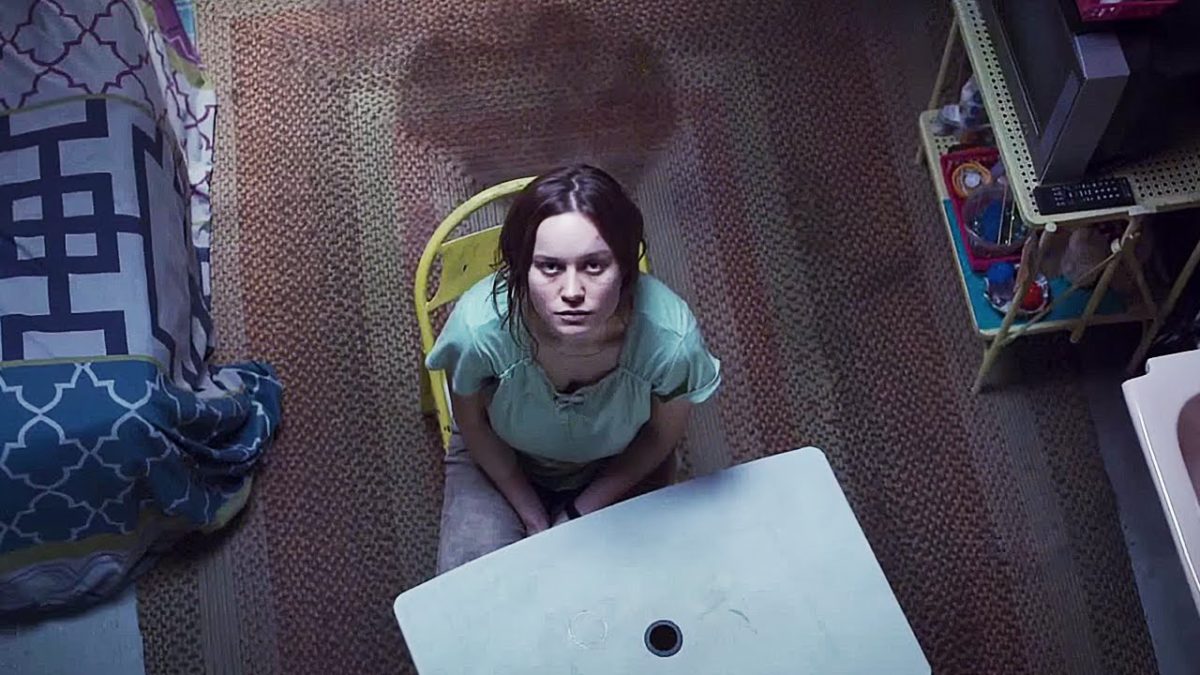
Room is a film about liberation hidden inside a tale of entrapment. I don’t want to share too much, but Jack (Tremblay) lives with Ma (Larson) in Room. Notice the lack of a definite article, it is missing because Room is the only place on Earth the 5-year-old has ever known. Room, we come to learn, is nothing more than a dingy tool-shed supplied with the bare necessities (a single bed where they both sleep, a toilet, a filthy rug, and an unreachable skylight). This is where Jack and Ma go through their daily regimen of washing, exercising, reading, eating, etc. At night, Jack is sent to the wardrobe while a nearly mythical monster of a man they call Old Nick unlocks the door that keeps Room locked up tight and proceeds to make strange noises with Ma on the creaky bed.
Jack knows of no world outside of Room, and all the inanimate objects within are his friends and playmates. “Good morning, lamp”; “good morning, sink,” he cheerfully greets each object daily. As they celebrate Jack’s fifth birthday, Ma decides that he’s now old enough to learn about the world outside of Room. She tells him how she was stolen by Old Nick when she was 17 and how she used to be a little girl named Joy with parents who live in a house, but Room is the only world she has known for the past 7 years. Viewers quickly grasp what Jack cannot. He does not like being forced to accept that there are other human beings and animals in a world that is real and not some imaginary images they see on the ancient television inside Room. I don’t think it is any coincidence that Ma’s actual name is Joy because despite the tremendously dark circumstances, joy sits just below the surface.
The second half of the movie introduces more characters and a whole new set of psychological dimensions. You should experience it for yourself rather than have me describe it here in inadequate terms. This second half is stronger in its emotional pull as we see a tremendous role reversal and young Tremblay steps into the spotlight even further. Room is ultimately a painful, conflicting, and gut-wrenching tale which is tremendously uncomfortable yet altogether enjoyable as we are reminded in a beautiful way the resilience and fullness of life.










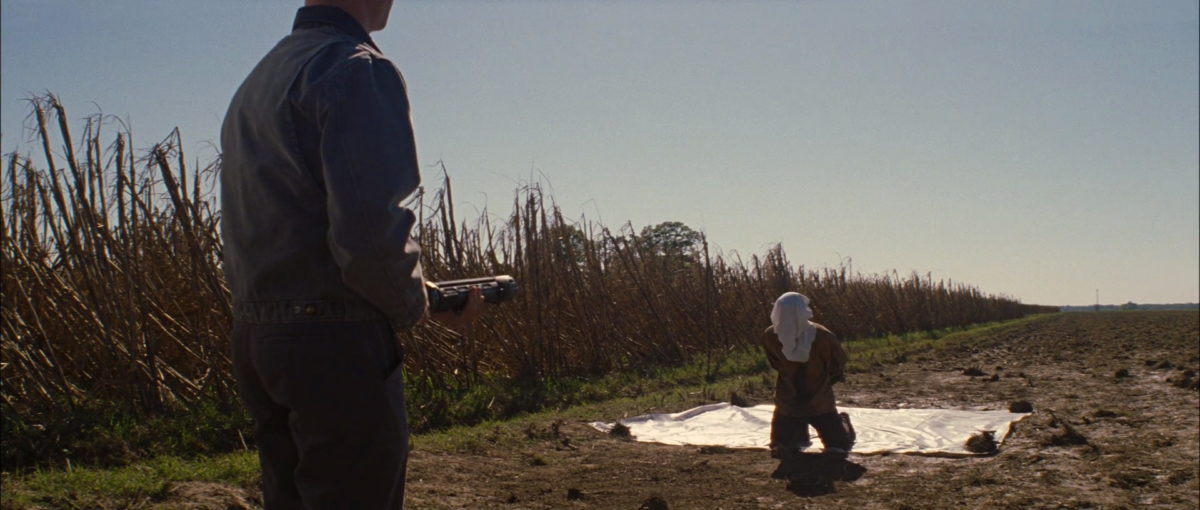
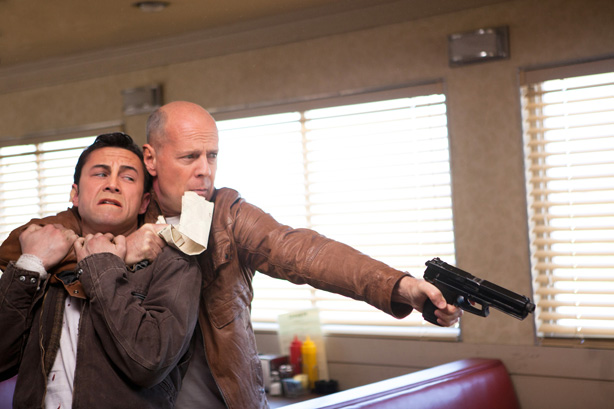 While it is a lucrative career, there is one downside, Loopers are expected to ‘close the loop’ by assassinating themselves. At this point they are given a huge payout and are effectively retired, left to enjoy the remaining 30 years of their life. When Joe’s future self (Bruce Willis) appears before young Joe, he hesitates to kill him, allowing him to escape and forces the younger self to track down the older self and kill him before the leader of the loopers, Abe (Jeff Daniels) finds him. The chase leads the two men to a remote farm, the home to Sara (Emily Blunt) and her son Cid (Pierce Gagnon), where they must finally sort out the ever-growing list of potential paradoxes.
 The cast are uniformly excellent and Emily Blunt and Joseph Gordon-Levitt (with a prosthetic nose which is very convincing in the close-up shots) are as good as you would imagine. It is however, Bruce Willis who is the stand-out. It’s been a long time since Willis has had to show any range, and while he gets to show-off his action chops in a series of scenes that will delight fans of Die Hard, it is in the more emotional scenes that he excels. In fact after the barmy opening act, Looper is strongest when engaging in the depth of character on display.
 You would think that with 20 years to work on a worthy follow-up to the Indiana Jones Trilogy that Steven Spielberg and his collaborator George Lucas could create an entertaining and exciting film. However, it seems that instead of becoming sweeter with time, this one just became rotten. In Indiana Jones and The Kingdom of the Crystal Skull, we see an elderly Indy (or should I say Henry because he is rarely called “Indiana” or “Indy” in this film) in his baggy grandpa pants with locks of grey-white hair peeking out under a crisp and rarely-dirty brown fedora you really don’t get the feeling that you’re watching anything historic. This is a movie that obviously misunderstood its audience, it’s exactly the type of summer blockbuster developed to make money at all costs: things blow up; there are aliens; and an unnecessary youthful sidekick.
 The other aspect of the film that disappointed me was the role that extra-terrestrials play. The original trilogy uses religious artifacts as the treasure the Indy is hunting. But as with the abominable Star Trek prequels that George Lucas thrust upon audiences, all of the religion and mysticism was replaced by science-fiction. Why don’t film-makers understand that audiences want to encounter something inexplicable in the theater. We don’t want midichlorians to give a scientific explanation of the force or science to replace our religion. The presence of the aliens is strong, but there is no dialogue between the two parties, much like Spielberg’s Close Encounters of the Third Kind.
 Ultimately, Indiana Jones and the Kingdom of the Crystal Skull is a film that, while not entirely bad, is nowhere near worthy of its lofty pedigree. As generic action films go, it may have provided some level of entertainment in the vein of National Treasure..But with the attachment of “Indiana Jones” to the title and the involvement of Harrison Ford, George Lucas and Steven Spielberg my expectations were raised and my standards were set to a level that these individuals can sadly no longer meet.
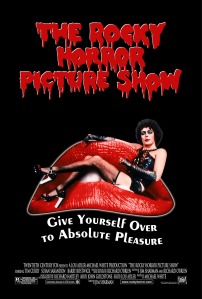 I was interested in this topic from the first time I read the challenge because of the way it is worded. It is asking for a movie that no one would expect you to love. This doesn’t imply that you actually do love that movie. It forces you to put yourself in the shoes of those that know you. You have to inspect your own preferences. If the challenge was asking for a film that you actually liked, then it would say, “A movie that people would be surprised to find that you loved.”
 I think it is a lot of fun, and the musical numbers will be stuck in your head for days. Tim Curry as the transvestite from the planet of Transylvania is funny, creepy, and campy all at once. This is my favorite movie to watch on Halloween.